
Structured Teaching (TEACCH) Program
Hope Kids provides affordable, inclusive, and professional education for children with autism and special needs in Phnom Penh and across Cambodia.
Structured Teaching (TEACCH) Program

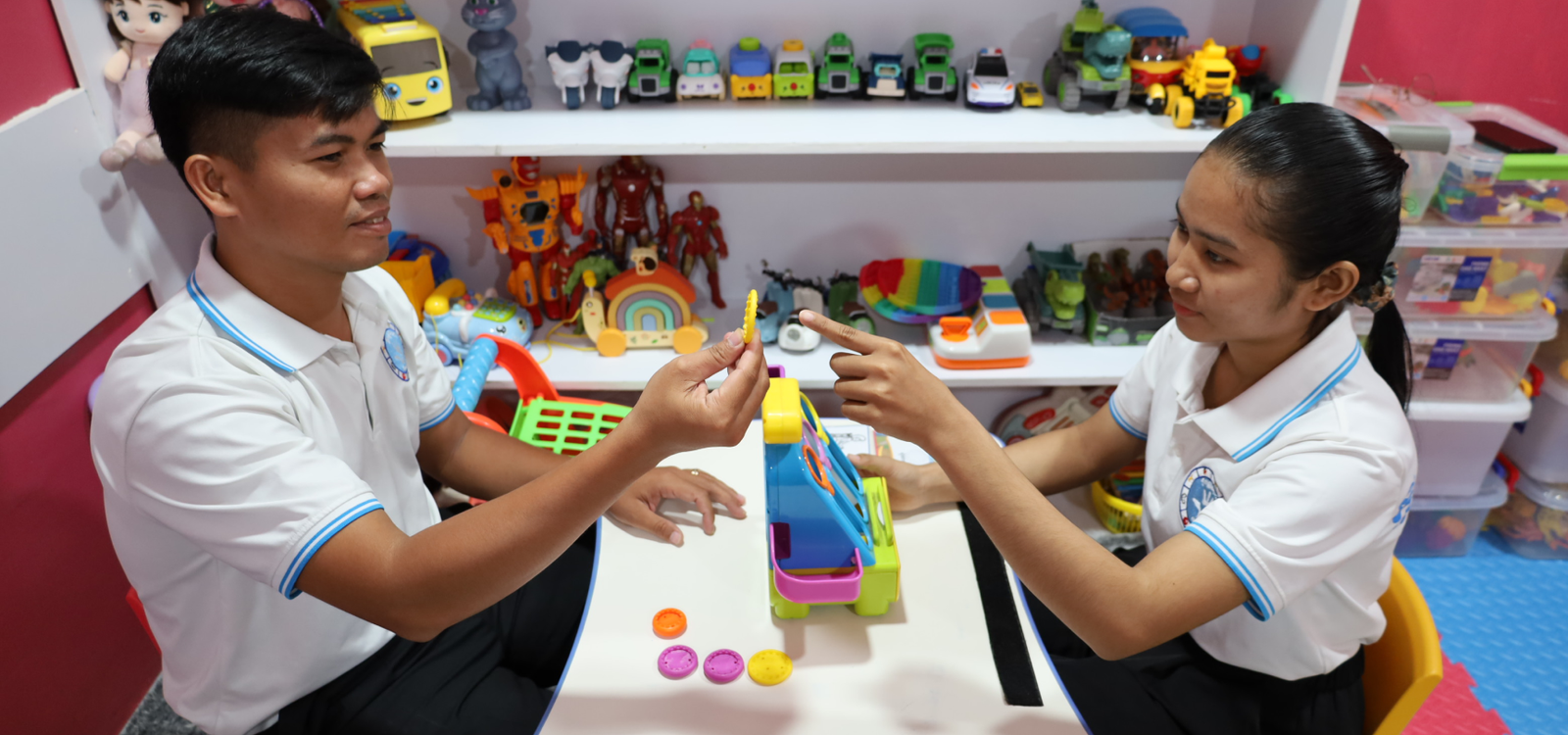
Structured TEACCHing at Hope Kids Special Education School in Phnom Penh, Cambodia.
Structured TEACCHing uses visual information, structured environments, individualized schedules, work systems, and clearly organized activities to help children understand what they need to do and gradually become more independent.
At Hope Kids, these principles are incorporated into individualized educational programs according to each child's developmental level, communication abilities, learning profile, strengths, and goals.
What Is the TEACCH Approach?
TEACCH stands for Treatment and Education of Autistic and Related Communication-Handicapped Children. It began as a program at the University of North Carolina and has developed into a broader approach to education and support for autistic individuals. One of the central components is Structured TEACCHing, which organizes the learning environment and activities around the individual's needs. Rather than relying primarily on verbal instructions, Structured TEACCHing makes important information visible and understandable. A child may be supported to understand:
What am I doing?
Where do I go?
What do I need to do?
How much do I need to do?
When am I finished?
What happens next?
What am I doing?
Where do I go?
How much do I need to do?
What do I need to do?
When am I finished?
What happens next?
What Are the Main Elements of Structured TEACCHing?
Structured TEACCHing commonly includes several interconnected elements:

Physical Structure
Clear physical boundaries and dedicated areas for specific activities (independent work, group instruction, play, quiet breaks).

Individualized Visual Schedules
Visual schedules showing what activities will occur and in what sequence, using objects, photos, icons, or written words.

Work & Activity Systems
Structured stations answering 4 questions: What work? How much? When am I finished? What comes next?

Visual Structure of Tasks
Visual clarity, organization, and instructions built directly into materials so children know how to complete them with minimal prompting.
Who Can Benefit From Structured TEACCHing?
It may be particularly helpful for children who:
- ● Have Autism Spectrum Condition (ASC)
- ● Have communication or language difficulties
- ● Find verbal instructions difficult to understand
- ● Have difficulty with transitions or changes in routine
- ● Benefit from visual information
- ● Have difficulty organizing or completing tasks
- ● Need support with attention and engagement
- ● Require additional support to develop independence
- ● Learn more successfully when activities are predictable and clearly structured
However, TEACCH is not a one-size-fits-all program. The level and type of structure should be adapted to the individual child.
How Can Structured TEACCHing Help Children?
The purpose of Structured TEACCHing is not simply to make a classroom look organized. The structure is used to help children understand, participate, learn, and become more independent.
Depending on the child, it may support:
Understanding & Following Routines
Visual schedules and predictable routines can help children understand what is happening now, what comes next, and when activities will change.
Independent Task Completion
Work systems can help children learn to start, complete, and finish activities with gradually reduced adult assistance.
Communication
Visual supports can make instructions, choices, routines, and expectations easier to understand. For some children, visual communication systems can also support their ability to express needs and make choices.
Attention & Engagement
Clearly organized activities can help children understand what they are expected to focus on and reduce unnecessary distractions.
Transitions
Visual information can help children prepare for changes between activities, locations, or routines.
Learning & Academic Readiness
Structured activities can support foundational skills such as matching, sorting, following instructions, task completion, early literacy, numeracy, and classroom participation.
Daily Living & Independence
Structured teaching principles can also be applied to functional routines such as washing hands, getting dressed, eating, organizing belongings, and completing personal-care routines.
Research on TEACCH-based interventions suggests potential benefits in areas including adaptive behavior, independent task completion, and some social and developmental skills, although outcomes vary and the evidence base is not equally strong for every outcome. Structured teaching is therefore best used as one component of an individualized educational program, rather than as a universal solution.
What Does TEACCH Look Like in a Classroom?
A structured classroom does not mean that every child sits alone and follows a rigid schedule. Instead, the environment is designed to make learning clear, predictable, and accessible. For example, a child's individual schedule might show:
Arrival
Morning Routine
Learning Activity
Break
Group Activity
Lunch
Independent Work
Home
Arrival
Morning Routine
Break
Learning Activity
Group Activity
Lunch
Home
Independent Work
During an independent work activity, the child may have a clearly organized workstation showing:
1. Match pictures
2. Put finished work away
3. Choose next activity
1. Match pictures
2. Put finished work away
3. Choose next activity
The level of structure can also change as the child develops. A younger child may need photographs or objects, while an older or more independent learner may use written schedules or more flexible systems. The goal is not dependence on visual supports. The goal is to use supports strategically and gradually develop greater understanding and independence.
How Does Hope Kids Implement Structured TEACCHing?
- At Hope Kids Special Education School in Cambodia, Structured TEACCHing principles are incorporated into individualized educational programs based on each child's needs.
- Our team considers:
- ● The child's current developmental abilities
- ● Communication and language skills
- ● Learning profile
- ● Strengths and interests
- ● Attention and engagement
- ● Sensory and environmental needs
- ● Independence and adaptive skills
- ● Individual learning goals
- Depending on the child, this may include:
Individualized Learning Plans
Educational goals are developed around the child's current abilities and the skills they need to develop next.
Visual Schedules
Children may use individualized visual schedules to understand daily routines, activities, and transitions.
Structured Work Systems
Activities are organized so children can understand what they need to do, how much work there is, and when they are finished.
Clearly Organized Learning Environments
Learning areas and materials are arranged to make activities and expectations easier to understand.
Individual and Small-Group Teaching
Children may receive one-to-one or small-group instruction depending on their learning goals and support needs.
Progress Monitoring
The team monitors children's progress and adjusts goals, activities, and levels of support as their skills develop.
What Skills Can Children Develop Through Structured Teaching?
TEACCH fosters independence across foundational functional and educational skill domains:
Communication
- • Understanding instructions
- • Following visual information
- • Making choices
- • Expressing needs
- • Developing functional communication
- • Supporting social communication
Learning
- • Attention and engagement
- • Following instructions
- • Task completion
- • Early academic skills
- • Problem-solving
- • Learning readiness
Independence
- • Completing activities independently
- • Following routines
- • Organizing materials
- • Managing transitions
- • Developing self-care routines
Social Participation
- • Participating in group activities
- • Turn-taking
- • Following classroom routines
- • Interacting with peers
- • Participating in shared activities
Daily Living
- • Personal-care routines
- • Organization
- • Following multi-step routines
- • Managing belongings
- • Developing functional independence
The specific skills targeted depend on what is meaningful and appropriate for each child.
What Training Does Hope Kids Have in TEACCH?
At Hope Kids, staff involved in implementing structured teaching receive appropriate training for their roles, including training related to TEACCH and Structured Teaching.
Is TEACCH Only for Autism?
The important consideration is whether a particular strategy helps that individual child understand, participate, learn, and become more independent.
Can TEACCH Strategies Be Used at Home?
Parents may use simple visual supports for:
- ● Morning and bedtime routines
- ● Getting dressed
- ● Brushing teeth
- ● Mealtimes
- ● Homework
- ● Cleaning up toys
- ● Leaving the house
- ● Transitions between activities
For example:
Wake up → Toilet → Get dressed → Breakfast → Brush teeth → School
The goal is not to create a rigid home environment. Visual supports can simply make routines more predictable and easier for the child to understand, while reducing theamount of verbal prompting they need.
Parents can work with teachers and therapists to choose visual supports that are appropriate for their child's communication and developmental level.
Frequently Asked Questions About TEACCH
Learn More About Structured Teaching at Hope Kids
Structured teaching is one part of a broader individualized approach to specialeducation.
At Hope Kids Special Education School in Cambodia, we combine structured learning with appropriate educational and therapeutic support to help children develop communication, learning, participation, functional skills, and independence.
If you would like to learn more about our Structured Teaching (TEACCH) Program, contact Hope Kids to discuss your child's individual learning and developmental needs.
Contact Hope Kids
If you would like to learn more about our Structured Teaching (TEACCH) Program, contact Hope Kids to discuss your child's individual learning and developmental needs.