Early Intervention Program
Hope Kids provides affordable, inclusive, and professional education for children with autism and special needs in Phnom Penh and across Cambodia.
Early Intervention Program

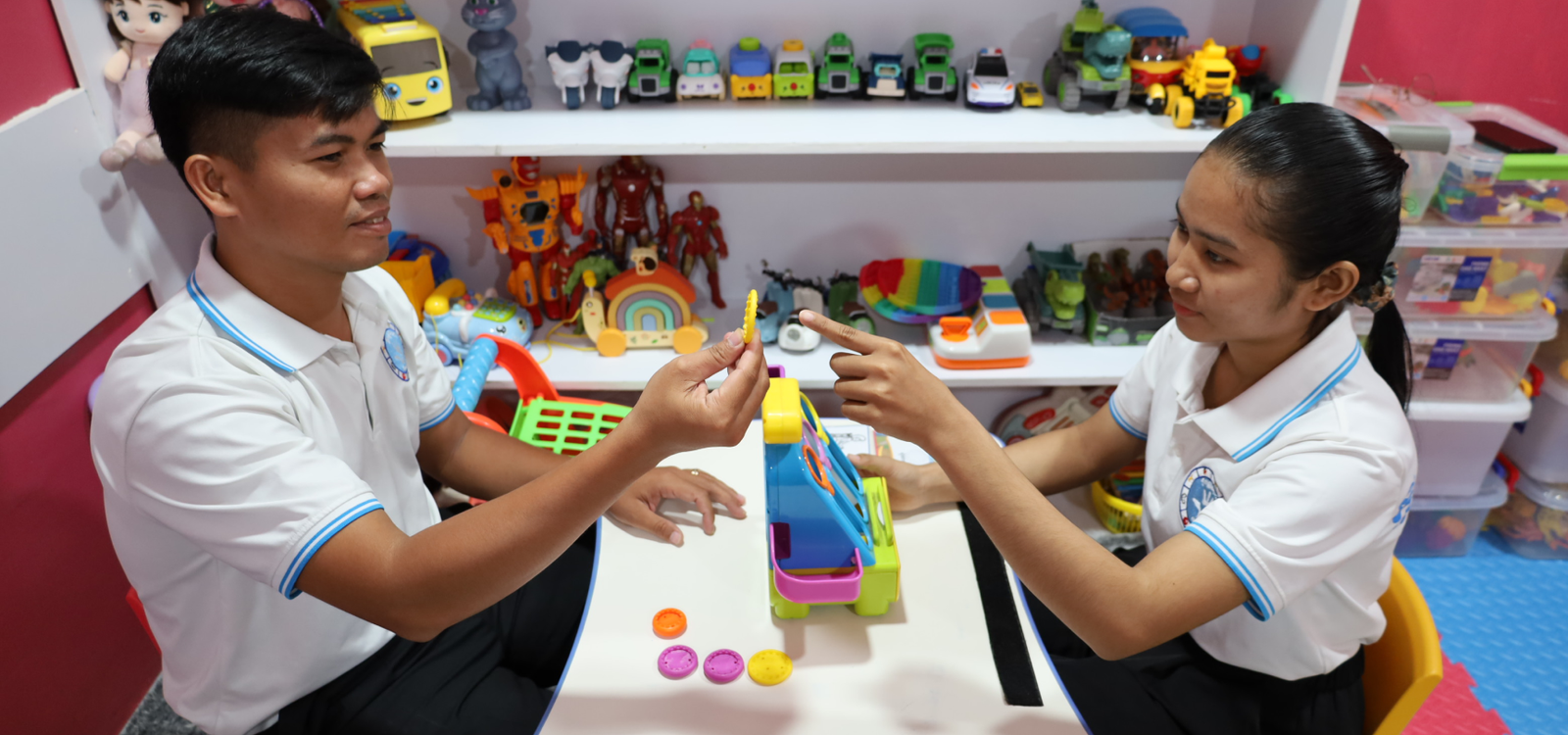
Depending on the child's needs, early intervention may include speech and language therapy, occupational therapy, physiotherapy, ABA and behavioral support, special education, structured teaching, and parent coaching.
What Is Early Intervention?
Early intervention refers to developmental, educational, and therapeutic support provided to young children who have, or may be at risk of, developmental delays or disabilities. Early intervention can support one or several areas of development, including communication and language, social interaction and play, cognitive and learning skills, fine-motor development, gross-motor development, emotional and behavioral regulation, self-care and daily living skills, attention and learning readiness, and early independence.

Communication and language
Supporting speech, understanding, and expressive language development.

Social interaction and play
Encouraging interaction with caregivers and peers through play.

Cognitive and learning skills
Developing attention, problem-solving, and early academic skills.

Fine-motor development
Developing hand strength, coordination, and fine-motor control.

Gross-motor development
Supporting movement, balance, coordination, and physical participation.

Emotional and behavioral regulation
Supporting emotional regulation and positive behavior.

Self-care and daily living skills
Building independence in dressing, eating, toileting, and personal care.

Attention and learning readiness
Developing attention, engagement, and readiness for learning.

Early independence
Supporting children to complete tasks with less adult assistance.
Why Is Early Intervention Important?
Benefits of Early Intervention
Early intervention may help children:
- • Develop communication and language skills
- • Build early learning skills
- • Strengthen motor development
- • Develop social interaction and play skills
- • Increase participation in everyday routines
- • Develop self-care and independence
- • Build school-readiness skills
- • Help families understand how to support development at home
Who Can Benefit From Early Intervention?
Early intervention may be appropriate for young children who have a developmental delay, Global Developmental Delay, Autism Spectrum Condition, speech or language delays, motor or physical developmental delays, difficulties with social interaction or play, attention or learning difficulties, sensory processing differences, behavioral or emotional regulation difficulties, cerebral palsy, Down syndrome, or other developmental conditions. A child does not necessarily need a formal diagnosis before developmental concerns can be assessed.
Developmental Delay
Children showing delays in milestones.
Autism Spectrum Condition
Children with ASC and developmental needs.
Speech and Language Delays
Children with communication difficulties.
Motor Delays
Children with movement or physical delays.
Social and Play Difficulties
Children needing support with interaction and play.
Attention and Learning
Children with attention or learning difficulties.
Sensory Processing
Children with sensory processing differences.
Behavioral and Emotional Needs
Children needing support with regulation and behavior.
What Are the Signs That a Child May Benefit From Early Intervention?
Every child develops differently, but parents may wish to seek professional advice when they notice ongoing concerns in areas such as communication, social interaction and play, motor development, learning and attention, daily living skills, regulation and behavior, or developmental regression. Developmental milestone checklists can help parents monitor development, but they are not diagnostic tools.
Communication
- • Limited or delayed spoken language
- • Difficulty understanding language
- • Difficulty communicating wants and needs
- • Limited use of gestures or other forms of communication
- • Difficulty engaging in back-and-forth communication
Social Interaction and Play
- • Difficulty interacting with caregivers or other children
- • Limited shared attention
- • Difficulty participating in play
- • Difficulty responding to or engaging with others
Motor Development
- • Delays in sitting, crawling, standing, or walking
- • Difficulty with balance or coordination
- • Difficulty using hands during play or everyday activities
Learning and Attention
- • Difficulty following simple instructions
- • Difficulty engaging with age-appropriate activities
- • Difficulty learning new skills
- • Difficulty sustaining attention during activities
Daily Living Skills
- • Significant feeding difficulties
- • Difficulty with dressing or personal care
- • Difficulty participating in everyday routines
Regulation and Behavior
- • Significant difficulty coping with changes
- • Frequent distress during everyday routines
- • Difficulty communicating when frustrated
- • Behaviors that interfere with learning, participation, or safety
What Happens During Early Intervention?
Early intervention should begin by understanding the individual child, rather than immediately choosing a particular therapy. A developmental assessment may consider what the child can currently do, what skills are emerging, where the difficulties are, what is affecting participation, what support may help, and how progress will be measured. Depending on the child, the team may consider communication and language, social interaction, play, cognitive and learning skills, fine- and gross-motor development, sensory processing, adaptive and daily living skills, emotional and behavioral regulation, and family priorities.
Developmental Assessment
We identify the child's current strengths, emerging skills, and areas where additional support may be helpful.
Individualized Goals
Goals are selected according to the child's developmental level and the skills that are meaningful for everyday participation.
Play-Based Learning
Young children learn through active exploration, interaction, play, and meaningful experiences. Activities are designed to be engaging and developmentally appropriate.
Multidisciplinary Support
Where appropriate, professionals from special education, speech and language therapy, occupational therapy, physiotherapy, and behavioral support can work together.
Family Collaboration
Parents and caregivers are included in understanding goals and identifying ways to support development during everyday routines.
Progress Monitoring
Progress is reviewed over time so that goals, teaching strategies, and levels of support can be adjusted as the child develops.
How Does Early Intervention Support Different Areas of Development?
Communication & Language
- Children may work on:
- • Understanding language
- • Expressing wants and needs
- • Functional communication
- • Speech and language development
- • Social communication
- • AAC where appropriate
Social & Emotional Development
Support may include social interaction, joint attention, play, emotional regulation, coping with changes, transitions, and participating in group activities.
Cognitive & Learning Skills
Children may develop attention, learning readiness, problem-solving, early academic skills, following instructions, and task participation.
Motor Development
Support may address fine-motor skills, gross-motor skills, balance, coordination, motor planning, and functional movement.
Adaptive & Daily Living Skills
Children may learn skills such as feeding, dressing, toileting, personal hygiene, following routines, making choices, and completing simple tasks independently.
Early Intervention for Autism
How Hope Kids Provides Early Intervention
At Hope Kids Special Education School in Phnom Penh, our Early Intervention Program is individualized according to the child's developmental profile and family priorities. The aim is not simply to provide more therapy. It is to provide the right support for the child's current needs.
Developmental Assessment
We identify the child's current strengths, emerging skills, and areas where additional support may be helpful.
Individualized Goals
Goals are selected according to the child's developmental level and the skills that are meaningful for everyday participation.
Play-Based Learning
Young children learn through active exploration, interaction, play, and meaningful experiences. Activities are designed to be engaging and developmentally appropriate.
Multidisciplinary Support
Where appropriate, professionals from special education, speech and language therapy, occupational therapy, physiotherapy, and behavioral support can work together.
Family Collaboration
Parents and caregivers are included in understanding goals and identifying ways to support development during everyday routines.
Progress Monitoring
Progress is reviewed over time so that goals, teaching strategies, and levels of support can be adjusted as the child develops.
The Role of Parents in Early Intervention
Why Choose Hope Kids for Early Intervention?
At Hope Kids, we believe early intervention should be individualized, developmentally appropriate, family-centred, functional, evidence-informed, and focused on meaningful participation. We look beyond a diagnosis or developmental checklist to understand who the child is, what they can do, what they enjoy, what is difficult for them, what they need to learn next, and how we can support them.
Individualized Approach
Support tailored to each child's unique developmental profile and needs.
Family-Centred
Parents and caregivers are partners in understanding goals and supporting development at home.
Developmentally Appropriate
Activities and goals matched to the child's current level and emerging skills.
Functional Focus
Skills are connected to everyday participation, not isolated exercises.
Evidence-Informed
Practice informed by current research, clinical evidence, and professional guidelines.
Meaningful Participation
The goal is to help children communicate, learn, play, participate, build relationships, and develop greater independence.
Frequently Asked Questions About Early Intervention
Early Intervention in Phnom Penh, Cambodia
If you have concerns about your child's speech and language, communication, social interaction, learning, behavior, motor development, sensory processing, or independence, an early developmental assessment can help you understand what support may be appropriate. Hope Kids Special Education School provides individualized early intervention services in Phnom Penh, Cambodia, with access to a multidisciplinary range of educational and therapy programs.
Contact UsContact Hope Kids
If you have concerns about your child's speech and language, communication, social interaction, learning, behavior, motor development, sensory processing, or independence, an early developmental assessment can help you understand what support may be appropriate.