Applied Behavior Analysis (ABA) Program
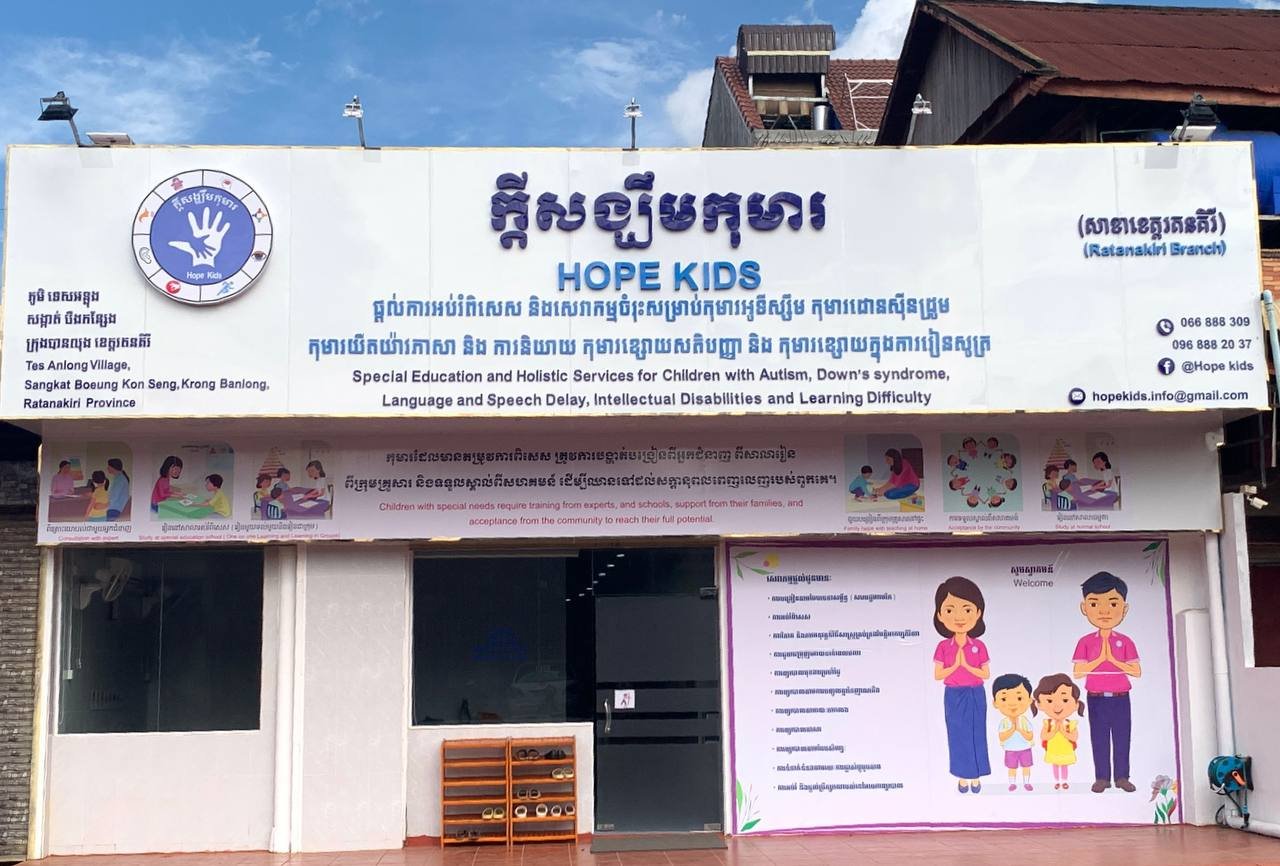
Hope Kids provides affordable, inclusive, and professional education for children with autism and special needs in Phnom Penh and across Cambodia.
Applied Behavior Analysis (ABA) Program

Individualized Behavioral Support for Communication, Learning, and Independence
ABA is not a single therapy technique or a fixed program. ABA-based interventions can be delivered in different ways depending on the child's age, developmental level, goals, environment, and individual needs.
At Hope Kids, our approach focuses on meaningful, functional goals that help
children participate more successfully at home, school, and in the community.
What Is Applied Behavior Analysis (ABA)?
Applied Behavior Analysis (ABA) is an approach that uses principles of learning and behavior to understand how skills develop and how environmental factors influence behavior.
ABA involves observing what happens before and after a behavior, identifying patterns, teaching new skills, and measuring whether an intervention is helping.
A simple way to understand the process is:
What is happening?
Why might it be happening?
What skill does the child need?
What teaching strategy may help?
Is the child making progress?
What is happening?
Why might it be happening?
What teaching strategy may help?
What skill does the child need?
Is the child making progress?
ABA-based intervention may be used to:
- ● Teach new skills
- ● Strengthen useful and functional behaviors
- ● Support communication
- ● Develop adaptive and daily living skills
- ● Improve learning and participation
- ● Support social interaction
- ● Reduce behaviors that interfere with learning, communication, participation, or safety
- ● Help children use skills across different people and environments
The American Academy of Pediatrics describes ABA as applying principles of learning to systematically improve socially significant behavior, teach new skills, and support the generalization of skills across environments.
What Does ABA Actually Involve?
ABA is sometimes associated with highly structured one-to-one teaching, but ABA-based intervention can take many forms.
Depending on the child's needs, intervention may include:
Skill Acquisition
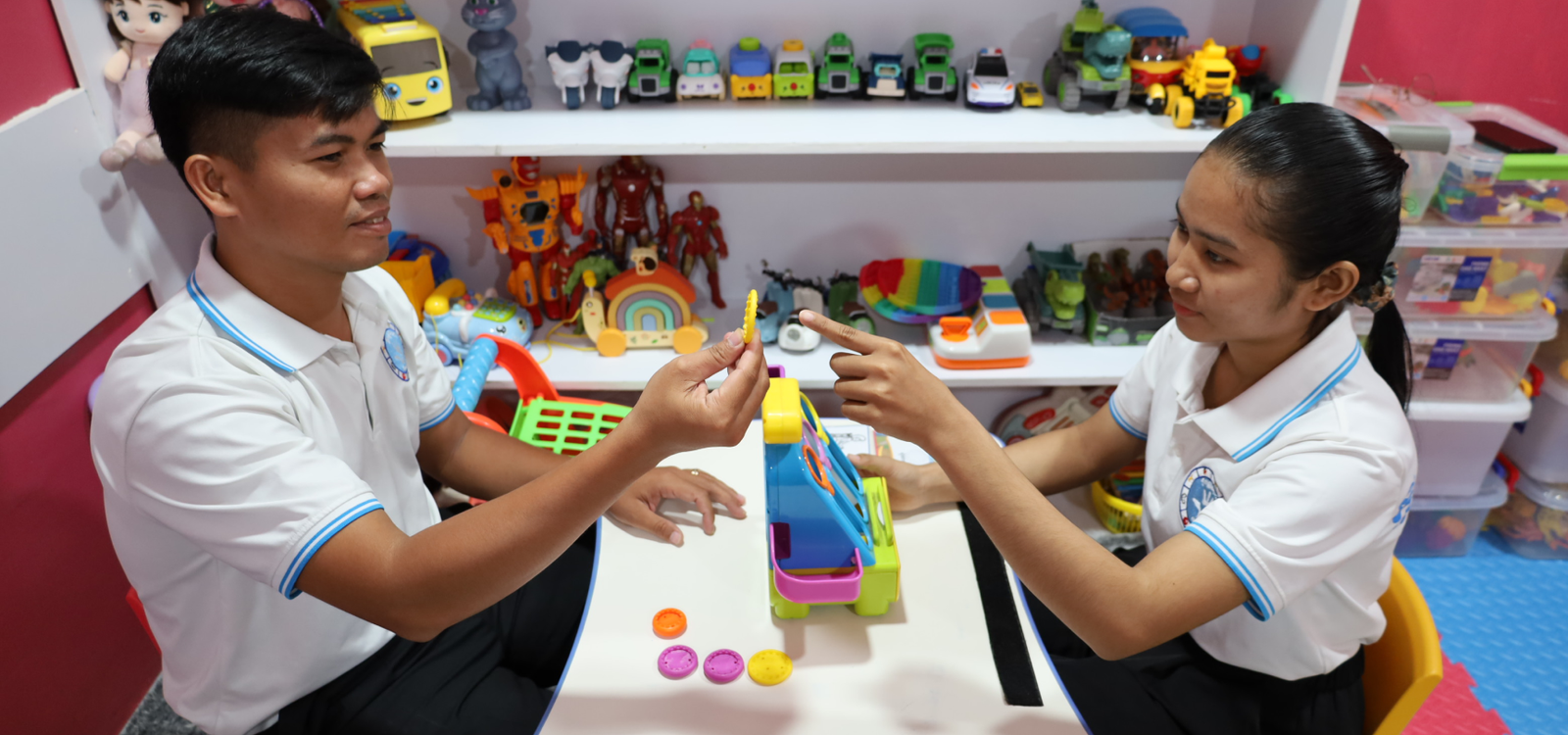
A new skill is broken down into manageable steps and taught systematically. For example, instead of simply expecting a child to “get dressed,” teaching may breakthe routine into smaller steps such as: Get shirt → Find opening → Put head through → Put one arm through → Put other arm through. The level of prompting can then be adjusted as the child becomes more independent.
Reinforcement
When a child successfully uses a new skill or behavior, an appropriate consequence can increase the likelihood that the skill will be used again. Reinforcement should be individualized. What motivates one child may not motivate another, and a child's interests and preferences can change over time.
Prompting and Fading
Children may initially need additional support to complete a task. Prompts can include verbal instructions, gestures, modelling, visual cues, or physical guidance when appropriate. The goal is to gradually reduce unnecessary prompts so the child can perform the skill more independently.
Functional Communication
ABA can be used to teach children to communicate wants, needs, choices, requests, questions, and other messages using speech, gestures, signs, pictures, AAC, or other appropriate communication methods.
Generalization
A skill is most useful when a child can use it beyond the therapy session. For example, a child who learns to request “help” during therapy should ideally be supported to use that skill at school, at home, and with different people.
Who Can Benefit From ABA?
ABA-based support may be considered for children who:
- ● Have Autism Spectrum Condition (ASC)
- ● Have developmental or intellectual disabilities
- ● Experience communication difficulties
- ● Need support developing adaptive or daily living skills
- ● Have difficulties with learning or task completion
- ● Need support with social interaction
- ● Experience behaviors that interfere with learning, communication, participation,
- or safety
- ● Benefit from structured teaching and systematic skill development
ABA is not appropriate in exactly the same way for every child. A child's needs,
The American Academy of Pediatrics recommends that autism interventions be individualized, developmentally appropriate, based on objective assessment, and monitored using data relevant to the child's goals.
What Skills Can ABA Support?
ABA can address a wide range of functional skills

Communication & Language
Building functional ways to express wants and needs, understand instructions, and connect with others.
- • Requesting wants and needs
- • Functional communication
- • Receptive language
- • Expressive language
- • Communication through AAC
- • Responding to communication
- • Initiating communication

Learning & Readiness
Developing the foundational skills necessary for classroom learning and task engagement.
- • Attention and engagement
- • Following instructions
- • Learning readiness
- • Task completion
- • Matching and sorting
- • Early academic skills
- • Problem-solving

Social Participation
Focusing on meaningful interaction, cooperative play, and peer engagement.
- • Turn-taking
- • Cooperative play
- • Participating in group activities
- • Initiating interactions
- • Responding to others
- • Developing appropriate social communication

Daily Living & Adaptive Skills
Building functional independence in self-care, personal hygiene, and daily routines.
- • Dressing and hygiene
- • Eating and toileting
- • Cleaning up and following routines
- • Organizing belongings
- • Safety skills
- • Completing daily tasks independently
Social goals should focus on meaningful interaction and participation, rather than simply making a child appear more socially typical.
Emotional & Behavioral Regulation
ABA-based strategies may support children in understanding routines, communicating when they need help, coping with changes, and developing alternative ways to respond when frustrated or overwhelmed.
When behaviors interfere with learning, participation, or safety, the team seeks to understand why the behavior occurs and what need or function it serves, rather than focusing only on stopping it. Behavior often serves a purpose, such as:
Communicating a Need
Trying to communicate a physical, emotional, or environmental need.
Seeking Attention or Interaction
Trying to initiate interaction or gain attention from caregivers or peers.
Accessing Desired Items
Trying to obtain an object, activity, or preferred experience.
Escaping Difficult Situations
Trying to escape a difficult, uncomfortable, or overwhelming situation.
Sensory or Environmental Factors
Responding to overwhelming sensory input (noise, lights, textures).
Difficulty Regulating Emotions
Experiencing difficulty expressing feelings or managing big emotions.
Our Goal: Teaching Skills, Not Just Stopping Behavior
The goal should not simply be "stop the behavior." Instead, our clinical team follows a supportive, problem-solving framework:
What is the child communicating?
Identify the underlying purpose, message, or unmet need behind the behavior.
What makes the situation difficult?
Examine task difficulty, sensory overstimulation, or communication barriers in the environment.
What skill can we teach instead?
Teach functional communication such as requesting "break", "help", or "finished".
How can we support the environment?
Adjust the activity, provide visual schedules, and modify demands to support success.
What is the child communicating?
Identify the underlying purpose, message, or unmet need behind the behavior.
What makes the situation difficult?
Examine task difficulty, sensory overstimulation, or communication barriers in the environment.
How can we support the environment?
Adjust the activity, provide visual schedules, and modify demands to support success.
What skill can we teach instead?
Teach functional communication such as requesting "break", "help", or "finished".
How Is ABA Individualized at Hope Kids?
A quality ABA program should not use exactly the same goals or teaching procedures for every child. Individualization considers each child's unique profile:
Goals are specific, measurable, and meaningful — for example, instead of a broad goal like "Improve behavior", a meaningful goal might be: "The child will independently request a break using speech, a gesture, or AAC during difficult activities."
Developmental Level & Current Skills
Tailored to what the child can currently do and what next milestone is developmentally appropriate.
Communication Abilities
Adapted to verbal speech, gestures, picture exchange, or high-tech AAC devices.
Learning Profile & Strengths
Utilizing the child's special interests and strengths to increase motivation and engagement.
Sensory & Environmental Needs
Structuring teaching settings to accommodate sensory sensitivities and preferences.
Family Priorities & Cultural Context
Aligning goals with what matters most to parents and family daily routines.
Long-Term Independence Goals
Focusing on practical life skills that foster lifelong independence and autonomy.
How Is Progress Measured in ABA?
Data collection and objective progress monitoring are core components of ABA. Progress data is used to make informed decisions — if a child is not progressing, the team adjusts the teaching approach rather than simply continuing the same intervention.
Frequency & Duration
Measuring how often a positive behavior occurs or how long a target engagement lasts.
Accuracy & Skill Level
Tracking how accurately and successfully a child completes each step of a task.
Prompt Level & Independence
Measuring how much prompting (physical, verbal, visual) is needed and fading prompts over time.
Maintenance & Generalization
Ensuring the child maintains skills over time and uses them across different people, settings, and home routines.
How Does Hope Kids Deliver ABA?
At Hope Kids Special Education School in Cambodia, ABA services are individualized according to each child's developmental and functional needs. Our multidisciplinary approach coordinates ABA with speech therapy, occupational therapy, physiotherapy, and Structured TEACCHing.
Individualized Assessment
The team identifies the child's current skills, strengths, challenges, and priority areas for development.
Functional & Meaningful Goals
Goals are selected based on practical value for communication, learning, participation, and quality of life.
Individualized Teaching
Teaching strategies are adapted according to how the child learns best and what support they require.
Positive Reinforcement
Appropriate, individualized reinforcement strategies are used to encourage skill acquisition and engagement.
Prompting & Fading
Children receive structured support when learning new skills, with prompts systematically faded as independence develops.
Progress Monitoring
Performance is continuously tracked using objective observation and data to refine strategies as needed.
Family Collaboration
Parents are engaged to support functional communication and independence skills across home and community settings.
What Parents Should Know About ABA
Understanding key aspects of ABA programs helps families make informed, confident decisions for their child.
What to Look for in a Program
Parents should ask about staff qualifications and supervision, individualized goal setting, progress data reviews, family involvement, and how the team responds when a child is distressed. Quality programs prioritize dignity, communication, and wellbeing.
Is ABA Only for Young Children?
No. ABA principles apply across childhood and beyond. For young children, goals focus on communication, play, and learning readiness. For older children, goals include independence, social participation, academic skills, community safety, and functional daily living skills.
Can Parents Participate in ABA?
Yes. Parents are essential partners. Learning opportunities can be incorporated into everyday routines like mealtimes, dressing, shopping, and bedtime to help children generalize skills across people and environments.
Frequently Asked Questions About ABA
Why Choose ABA at Hope Kids?
At Hope Kids Special Education School in Cambodia, we provide ABA services that are individualized, measurable, functional, and integrated with the child's broader educational program. Our goal is to help children develop meaningful skills that increase participation, independence, and quality of life at home, school, and in the community.
Contact UsContact Hope Kids
If you would like to learn more about ABA services in Phnom Penh, Cambodia, contact Hope Kids Special Education School to discuss your child's individual needs. Our team can help you understand whether ABA or another combination of educational and therapeutic supports may be appropriate for your child.