hope kids
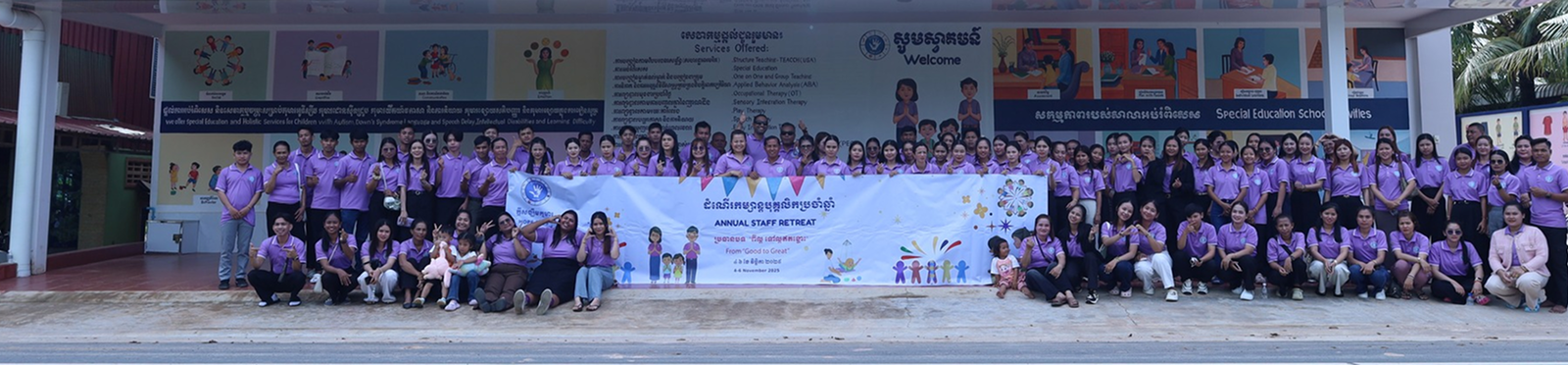
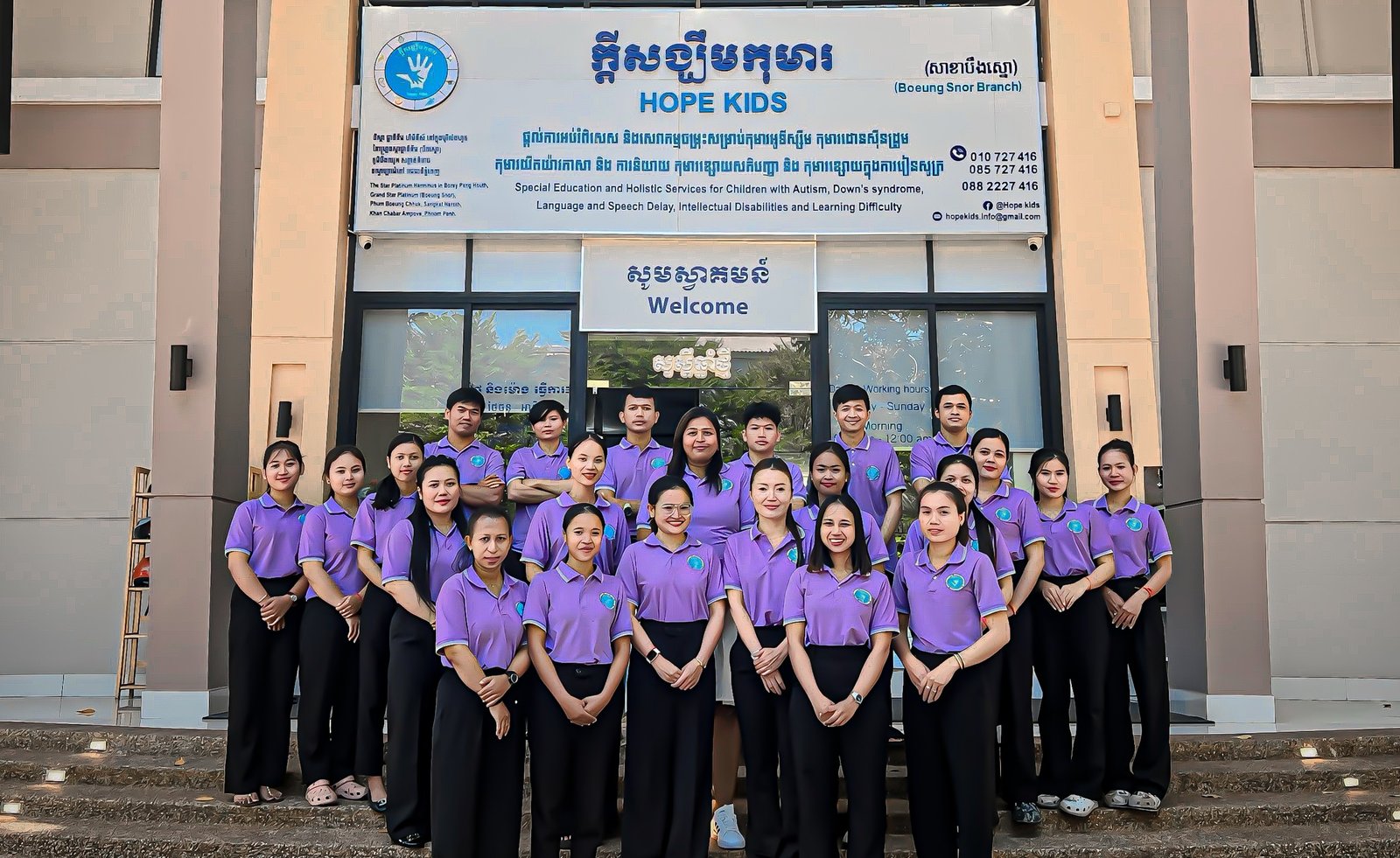
A group of our professional team at Hope Kids
Welcome To
HOPE KIDS

Special Education School

At Hope Kids Special Education School, we offer holistic services for children with autism, Down syndrome, speech and language delay, intellectual disabilities, learning difficulties and cerebral palsy

About Us

HOPE KIDS Special Education School

Hope Kids was founded in Cambodia to make quality special education accessible to every child regardless of financial or geographic limitations. We serve families from all backgrounds and provinces, ensuring every child has the opportunity to learn, grow, and thrive.

Read More

Our Programs

<p>Hope Kids uses the TEACCH® Structured Teaching approach from the University of North Carolina, USA. This method supports children with autism through visual tools, structured environments, individualized schedules, and organized classroom systems. All staff are trained in TEACCH, with some receiving advanced training from the USA.</p>

Structured Teaching (TEACCH) Program

Hope Kids uses the TEACCH® Structured Teaching approach from the University of North Carolina, USA. This method supports children with autism through visual tools, structured environments, individualized schedules, and organized classroom systems. All staff are trained in TEACCH, with some receiving advanced training from the USA.

Details
<p>Special education at Hope Kids is fully individualized to meet the needs of children with mental, physical, emotional, or behavioral challenges. &nbsp;Led by Director Mrs. Mam Lay, who has over 17 years of experience, the program provides personalized learning approaches for children with diverse needs.</p>

Special Education Program

Special education at Hope Kids is fully individualized to meet the needs of children with mental, physical, emotional, or behavioral challenges. &nbsp;Led by Director Mrs. Mam Lay, who has over 17 years of experience, the program provides personalized learning approaches for children with diverse needs.

Details
<p>ABA is a proven, research based method for improving behavior, communication, social skills, and daily living abilities in children with autism. ​Several Hope Kids staff are undergoing ABA Technician training ensuring high-quality and evidence based support.</p>

Applied Behavior Analysis (ABA) Program

ABA is a proven, research based method for improving behavior, communication, social skills, and daily living abilities in children with autism. ​Several Hope Kids staff are undergoing ABA Technician training ensuring high-quality and evidence based support.

Details
<p>OT helps children develop essential skills for daily living, play, school readiness, fine and gross motor development, sensory processing, and emotional regulation. Therapy is play based and tailored to each child’s needs.</p>

Occupational Therapy

OT helps children develop essential skills for daily living, play, school readiness, fine and gross motor development, sensory processing, and emotional regulation. Therapy is play based and tailored to each child’s needs.

Details
<p>This therapy helps children with sensory processing difficulties respond more effectively to sensory input. A certified therapist assesses each child’s sensory needs and creates individualized sensory diets to improve focus, behavior, and participation.This therapy helps children with sensory processing difficulties respond more effectively to sensory input. A certified therapist assesses each child’s sensory needs and creates individualized sensory diets to improve focus, behavior, and participation.</p>

Sensory Integration Therapy

This therapy helps children with sensory processing difficulties respond more effectively to sensory input. A certified therapist assesses each child’s sensory needs and creates individualized sensory diets to improve focus, behavior, and participation.This therapy helps children with sensory processing difficulties respond more effectively to sensory input. A certified therapist assesses each child’s sensory needs and creates individualized sensory diets to improve focus, behavior, and participation.

Details
<p>Designed for children from 18 months onward, early intervention targets speech, motor, cognitive, and social emotional development at the earliest stage. A multidisciplinary team works together to support optimal early growth.</p>

Early Intervention Program

Designed for children from 18 months onward, early intervention targets speech, motor, cognitive, and social emotional development at the earliest stage. A multidisciplinary team works together to support optimal early growth.

Details
<p>Play therapy helps children express themselves, develop social and emotional skills, improve behavior, and enhance imagination. Guided by a Level 1 Play Therapy certified Program Director, Hope Kids integrates play based learning into daily sessions.</p>

Play Therapy

Play therapy helps children express themselves, develop social and emotional skills, improve behavior, and enhance imagination. Guided by a Level 1 Play Therapy certified Program Director, Hope Kids integrates play based learning into daily sessions.

Details
<p>The American Speech-Language-Hearing Association (ASHA) describes speech-language pathologists as professionals who assess and treat communication and swallowing disorders across the lifespan, including difficulties with speech, language, social communication, and related areas. </p>

Speech & Language Therapy

The American Speech-Language-Hearing Association (ASHA) describes speech-language pathologists as professionals who assess and treat communication and swallowing disorders across the lifespan, including difficulties with speech, language, social communication, and related areas. 

Details
<p>Art Therapy is different from an ordinary art class. The purpose is not primarily to teach artistic technique or produce a finished artwork. The creative process itself can become a way for a child to communicate, explore emotions, develop coping strategies, and participate in therapeutic work. Art activities vs. Art Therapy: simply giving a child paints, crayons, or clay does not automatically make an activity Art Therapy. At Hope Kids, creative activities may also be incorporated into other therapies and educational programs when they support the child's individual goals. The goal is always to connect the activity to a meaningful developmental or functional goal.</p>

Art Therapy

Art Therapy is different from an ordinary art class. The purpose is not primarily to teach artistic technique or produce a finished artwork. The creative process itself can become a way for a child to communicate, explore emotions, develop coping strategies, and participate in therapeutic work. Art activities vs. Art Therapy: simply giving a child paints, crayons, or clay does not automatically make an activity Art Therapy. At Hope Kids, creative activities may also be incorporated into other therapies and educational programs when they support the child's individual goals. The goal is always to connect the activity to a meaningful developmental or functional goal.

Details
<p>PECS was developed by Andy Bondy, PhD, and Lori Frost, MS, CCC-SLP, and follows a structured six-phase teaching protocol. The primary goal is not simply to teach a child to use pictures. It is to help the child become a more independent and effective communicator across everyday environments. PECS can be particularly useful for children who cannot yet rely consistently on spoken language. AAC is often multimodal, meaning that a child may use several forms of communication depending on the situation. The purpose of AAC is to increase effective communication, not to prevent speech.</p>

Picture Exchange Communication System (PECS)

PECS was developed by Andy Bondy, PhD, and Lori Frost, MS, CCC-SLP, and follows a structured six-phase teaching protocol. The primary goal is not simply to teach a child to use pictures. It is to help the child become a more independent and effective communicator across everyday environments. PECS can be particularly useful for children who cannot yet rely consistently on spoken language. AAC is often multimodal, meaning that a child may use several forms of communication depending on the situation. The purpose of AAC is to increase effective communication, not to prevent speech.

Details
<p>School readiness is about much more than knowing letters and numbers. It is about having an appropriate foundation for learning and participating in the classroom, with the level of support adjusted to the child's individual needs. A child does not need to have mastered every skill before starting school. Instead, preparation can help children develop useful skills and strategies while helping adults understand what support the child may need. School readiness support provides opportunities to practice these skills before and during the transition to school.</p>

School Readiness Program

School readiness is about much more than knowing letters and numbers. It is about having an appropriate foundation for learning and participating in the classroom, with the level of support adjusted to the child's individual needs. A child does not need to have mastered every skill before starting school. Instead, preparation can help children develop useful skills and strategies while helping adults understand what support the child may need. School readiness support provides opportunities to practice these skills before and during the transition to school.

Details
<p>Learning to become independent is a gradual process. For children, everyday activities such as getting dressed, brushing their teeth, eating, using the toilet, packing their belongings, and following routines are important opportunities to develop independence, confidence, and participation. For children with developmental differences, everyday tasks that appear simple to adults may involve several underlying skills. Breaking a task into smaller steps can make the learning process much more manageable.</p>

Activities of Daily Living (ADL) Training

Learning to become independent is a gradual process. For children, everyday activities such as getting dressed, brushing their teeth, eating, using the toilet, packing their belongings, and following routines are important opportunities to develop independence, confidence, and participation. For children with developmental differences, everyday tasks that appear simple to adults may involve several underlying skills. Breaking a task into smaller steps can make the learning process much more manageable.

Details
<p>Parents receive continuous training, emotional support, and guidance to better understand their childs needs and development. Services include counseling, workshops, home strategies, collaboration support, and transition planning.</p>

Parent Education and Counselling

Parents receive continuous training, emotional support, and guidance to better understand their childs needs and development. Services include counseling, workshops, home strategies, collaboration support, and transition planning.

Details
<p>We provide individualized support for children with cerebral palsy through personalized education plans, physiotherapy, occupational therapy, and adaptive learning. Our dedicated team helps improve physical abilities, communication skills, and overall development in a nurturing and inclusive environment.</p>

Cerebral Palsy Development Program

We provide individualized support for children with cerebral palsy through personalized education plans, physiotherapy, occupational therapy, and adaptive learning. Our dedicated team helps improve physical abilities, communication skills, and overall development in a nurturing and inclusive environment.

Details
<p>Hope Kids uses the TEACCH® Structured Teaching approach from the University of North Carolina, USA. This method supports children with autism through visual tools, structured environments, individualized schedules, and organized classroom systems. All staff are trained in TEACCH, with some receiving advanced training from the USA.</p>

Structured Teaching (TEACCH) Program

Hope Kids uses the TEACCH® Structured Teaching approach from the University of North Carolina, USA. This method supports children with autism through visual tools, structured environments, individualized schedules, and organized classroom systems. All staff are trained in TEACCH, with some receiving advanced training from the USA.

Details
<p>ABA is a proven, research based method for improving behavior, communication, social skills, and daily living abilities in children with autism. ​Several Hope Kids staff are undergoing ABA Technician training ensuring high-quality and evidence based support.</p>

Applied Behavior Analysis (ABA) Program

ABA is a proven, research based method for improving behavior, communication, social skills, and daily living abilities in children with autism. ​Several Hope Kids staff are undergoing ABA Technician training ensuring high-quality and evidence based support.

Details
<p>OT helps children develop essential skills for daily living, play, school readiness, fine and gross motor development, sensory processing, and emotional regulation. Therapy is play based and tailored to each child’s needs.</p>

Occupational Therapy

OT helps children develop essential skills for daily living, play, school readiness, fine and gross motor development, sensory processing, and emotional regulation. Therapy is play based and tailored to each child’s needs.

Details
<p>This therapy helps children with sensory processing difficulties respond more effectively to sensory input. A certified therapist assesses each child’s sensory needs and creates individualized sensory diets to improve focus, behavior, and participation.This therapy helps children with sensory processing difficulties respond more effectively to sensory input. A certified therapist assesses each child’s sensory needs and creates individualized sensory diets to improve focus, behavior, and participation.</p>

Sensory Integration Therapy

This therapy helps children with sensory processing difficulties respond more effectively to sensory input. A certified therapist assesses each child’s sensory needs and creates individualized sensory diets to improve focus, behavior, and participation.This therapy helps children with sensory processing difficulties respond more effectively to sensory input. A certified therapist assesses each child’s sensory needs and creates individualized sensory diets to improve focus, behavior, and participation.

Details
<p>Play therapy helps children express themselves, develop social and emotional skills, improve behavior, and enhance imagination. Guided by a Level 1 Play Therapy certified Program Director, Hope Kids integrates play based learning into daily sessions.</p>

Play Therapy

Play therapy helps children express themselves, develop social and emotional skills, improve behavior, and enhance imagination. Guided by a Level 1 Play Therapy certified Program Director, Hope Kids integrates play based learning into daily sessions.

Details
<p>The American Speech-Language-Hearing Association (ASHA) describes speech-language pathologists as professionals who assess and treat communication and swallowing disorders across the lifespan, including difficulties with speech, language, social communication, and related areas. </p>

Speech & Language Therapy

The American Speech-Language-Hearing Association (ASHA) describes speech-language pathologists as professionals who assess and treat communication and swallowing disorders across the lifespan, including difficulties with speech, language, social communication, and related areas. 

Details
<p>Art Therapy is different from an ordinary art class. The purpose is not primarily to teach artistic technique or produce a finished artwork. The creative process itself can become a way for a child to communicate, explore emotions, develop coping strategies, and participate in therapeutic work. Art activities vs. Art Therapy: simply giving a child paints, crayons, or clay does not automatically make an activity Art Therapy. At Hope Kids, creative activities may also be incorporated into other therapies and educational programs when they support the child's individual goals. The goal is always to connect the activity to a meaningful developmental or functional goal.</p>

Art Therapy

Art Therapy is different from an ordinary art class. The purpose is not primarily to teach artistic technique or produce a finished artwork. The creative process itself can become a way for a child to communicate, explore emotions, develop coping strategies, and participate in therapeutic work. Art activities vs. Art Therapy: simply giving a child paints, crayons, or clay does not automatically make an activity Art Therapy. At Hope Kids, creative activities may also be incorporated into other therapies and educational programs when they support the child's individual goals. The goal is always to connect the activity to a meaningful developmental or functional goal.

Details
<p>School readiness is about much more than knowing letters and numbers. It is about having an appropriate foundation for learning and participating in the classroom, with the level of support adjusted to the child's individual needs. A child does not need to have mastered every skill before starting school. Instead, preparation can help children develop useful skills and strategies while helping adults understand what support the child may need. School readiness support provides opportunities to practice these skills before and during the transition to school.</p>

School Readiness Program

School readiness is about much more than knowing letters and numbers. It is about having an appropriate foundation for learning and participating in the classroom, with the level of support adjusted to the child's individual needs. A child does not need to have mastered every skill before starting school. Instead, preparation can help children develop useful skills and strategies while helping adults understand what support the child may need. School readiness support provides opportunities to practice these skills before and during the transition to school.

Details
<p>Learning to become independent is a gradual process. For children, everyday activities such as getting dressed, brushing their teeth, eating, using the toilet, packing their belongings, and following routines are important opportunities to develop independence, confidence, and participation. For children with developmental differences, everyday tasks that appear simple to adults may involve several underlying skills. Breaking a task into smaller steps can make the learning process much more manageable.</p>

Activities of Daily Living (ADL) Training

Learning to become independent is a gradual process. For children, everyday activities such as getting dressed, brushing their teeth, eating, using the toilet, packing their belongings, and following routines are important opportunities to develop independence, confidence, and participation. For children with developmental differences, everyday tasks that appear simple to adults may involve several underlying skills. Breaking a task into smaller steps can make the learning process much more manageable.

Details
<p>Parents receive continuous training, emotional support, and guidance to better understand their childs needs and development. Services include counseling, workshops, home strategies, collaboration support, and transition planning.</p>

Parent Education and Counselling

Parents receive continuous training, emotional support, and guidance to better understand their childs needs and development. Services include counseling, workshops, home strategies, collaboration support, and transition planning.

Details
<p>We provide individualized support for children with cerebral palsy through personalized education plans, physiotherapy, occupational therapy, and adaptive learning. Our dedicated team helps improve physical abilities, communication skills, and overall development in a nurturing and inclusive environment.</p>

Cerebral Palsy Development Program

We provide individualized support for children with cerebral palsy through personalized education plans, physiotherapy, occupational therapy, and adaptive learning. Our dedicated team helps improve physical abilities, communication skills, and overall development in a nurturing and inclusive environment.

Details
<p>Special education at Hope Kids is fully individualized to meet the needs of children with mental, physical, emotional, or behavioral challenges. &nbsp;Led by Director Mrs. Mam Lay, who has over 17 years of experience, the program provides personalized learning approaches for children with diverse needs.</p>

Special Education Program

Special education at Hope Kids is fully individualized to meet the needs of children with mental, physical, emotional, or behavioral challenges. &nbsp;Led by Director Mrs. Mam Lay, who has over 17 years of experience, the program provides personalized learning approaches for children with diverse needs.

Details
<p>Designed for children from 18 months onward, early intervention targets speech, motor, cognitive, and social emotional development at the earliest stage. A multidisciplinary team works together to support optimal early growth.</p>

Early Intervention Program

Designed for children from 18 months onward, early intervention targets speech, motor, cognitive, and social emotional development at the earliest stage. A multidisciplinary team works together to support optimal early growth.

Details
<p>PECS was developed by Andy Bondy, PhD, and Lori Frost, MS, CCC-SLP, and follows a structured six-phase teaching protocol. The primary goal is not simply to teach a child to use pictures. It is to help the child become a more independent and effective communicator across everyday environments. PECS can be particularly useful for children who cannot yet rely consistently on spoken language. AAC is often multimodal, meaning that a child may use several forms of communication depending on the situation. The purpose of AAC is to increase effective communication, not to prevent speech.</p>

Picture Exchange Communication System (PECS)

PECS was developed by Andy Bondy, PhD, and Lori Frost, MS, CCC-SLP, and follows a structured six-phase teaching protocol. The primary goal is not simply to teach a child to use pictures. It is to help the child become a more independent and effective communicator across everyday environments. PECS can be particularly useful for children who cannot yet rely consistently on spoken language. AAC is often multimodal, meaning that a child may use several forms of communication depending on the situation. The purpose of AAC is to increase effective communication, not to prevent speech.
Details
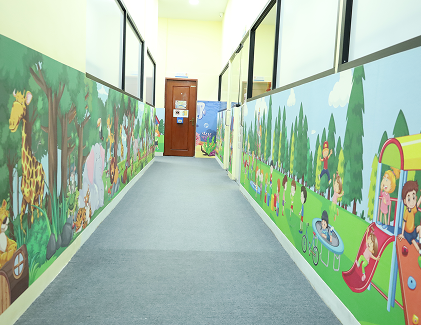
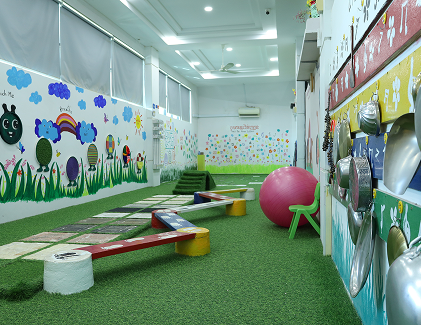
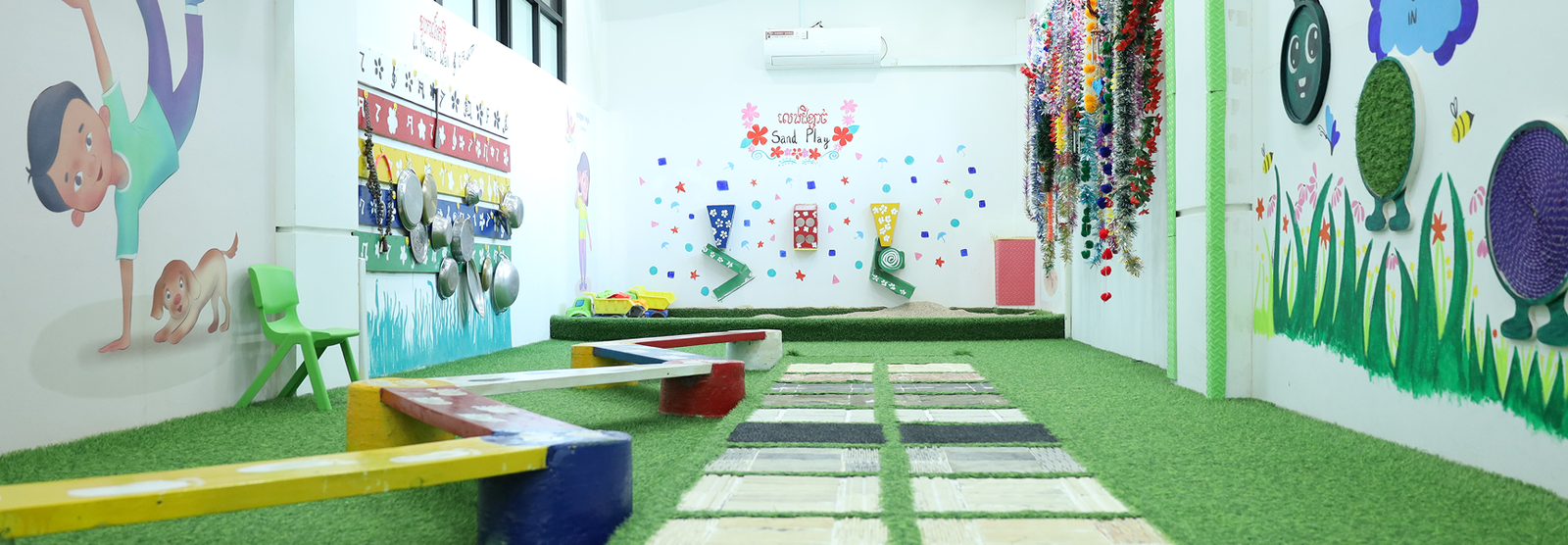
Our school facilities accommodate the safe and nurturing learning environment.

School Facilities

A Safe and Nurturing Learning Environment

Hope Kids is equipped with sensory rooms, therapy spaces, learning classrooms, and play areas designed to support children’s development. Each facility is created for safety, engagement, and comfort.
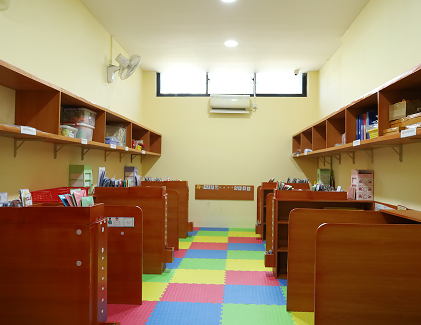
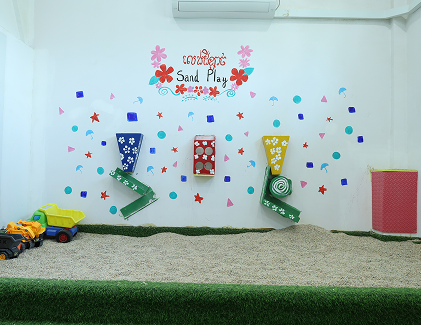
Our team's working spaces Sand playing background Our learning and playing spaces Sensory advocate facilities

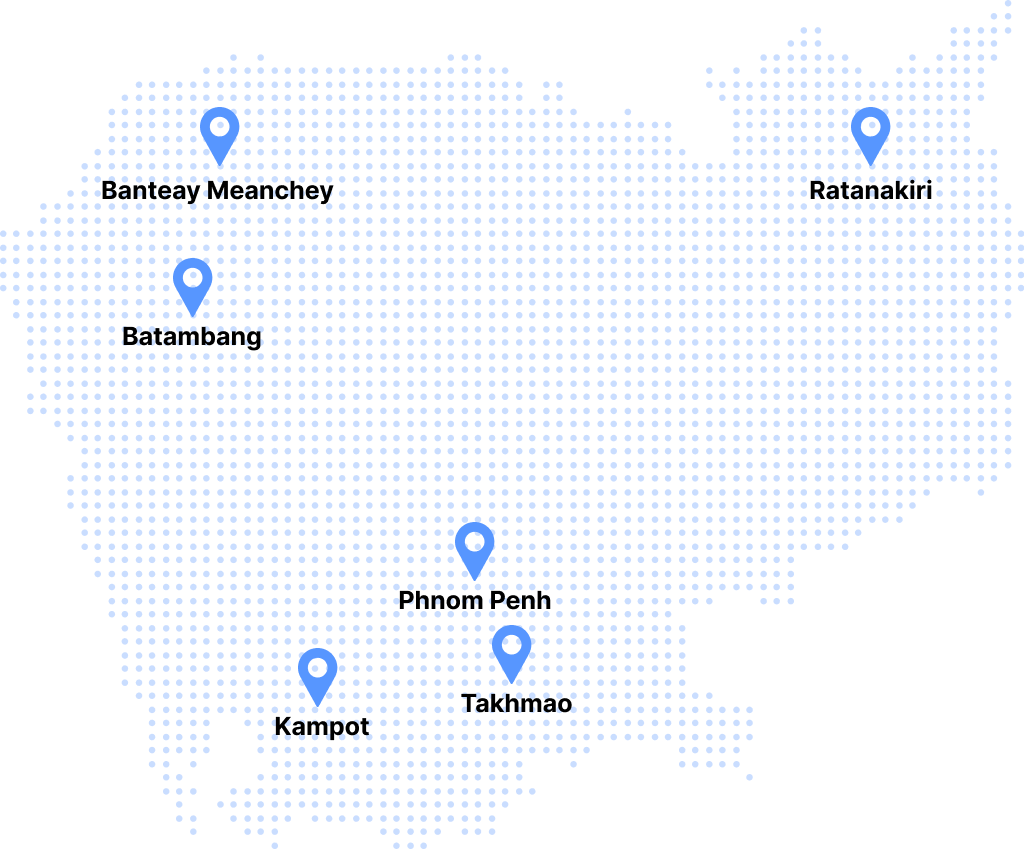
Our Branches

Our location across Cambodia
Annual Staffs Trip

0

Years

0

Branches

0

Students

0

Teachers & Staff

Parents’ Testimonials

One family with three children diagnosed with autism shared how Hope Kids Special Education School transformed their lives. After enrolling, they found renewed hope and wish to inspire other parents facing similar struggles to trust Hope Kids with their child’s development.


Mr. Khat Sophy & Mrs. Kaing Sokheang 
Ratanakiri Province

Many parents from Ratanakiri province have also spoken about the remarkable progress their children have made since attending Hope Kids Special Education School.


Ratanakiri Province

Mrs. Hao Saret, a mother from Phnom Penh, shared the remarkable improvements her son with autism has made after enrolling at Hope Kids Special Education School. She also expressed her gratitude for the supportive resources provided, which have helped her care for him more effectively at home.


Mrs. Hao Saret 
Battambang

Frequently Asked Questions

What does TEACCH stand for?

Is TEACCH a therapy?

Does TEACCH replace other therapies?

Will my child always need visual schedules?

How is my child's progress measured?

What is the difference between special education and traditional education?
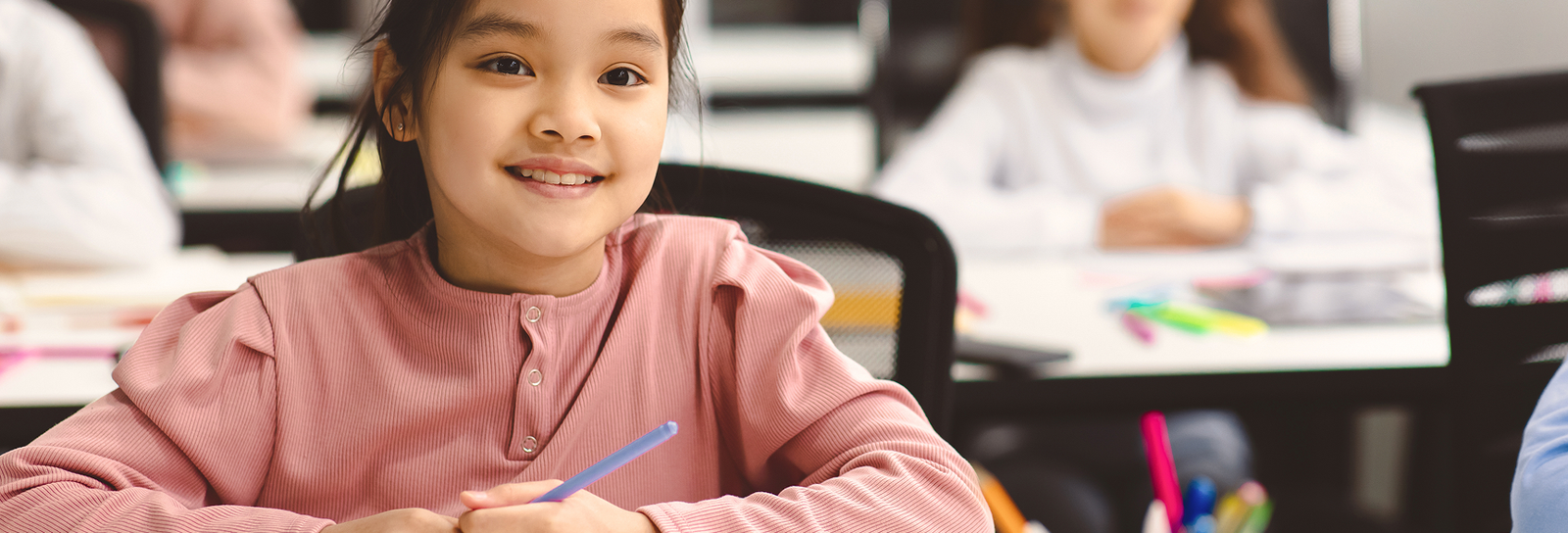
Children learning and interacting at Hope Kids Special Education School in Cambodia

At Hope Kids Special Education School, we offer holistic services for children with autism, Down syndrome, speech and language delay,intellectual disabilities, learning difficulties and cerebral palsy

Contact Form

We’ll respond within 24-48 hours. If urgent, you may also call us at 085 253 388
Find Us!

Phnom Penh (Stueng Mean Chey)

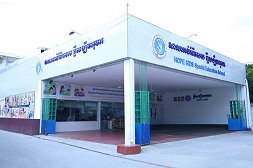
#579, Street 35C, Phum Meanchey, Sangkat Stueng Meanchey, Khan Meanchey, Phnom Penh, Cambodia

085 253 388 / 086 253 388

Email: hopekids.info@gmail.com

Operating Hours: Monday – Sunday | 8:00 AM – 5:00 PM

 Hope Kids Phnom Penh (Stueng Mean Chey)

Phnom Penh (Borey Peng Huoth Beoung Snor)

In Borey Peng Huoth Grand Star Platinum (Boeung Snor, The Star Platinum Herminus, Phnom Penh)

010 727 416 / 085 727 416

Email: hopekids.info@gmail.com

Operating Hours: Monday – Sunday | 8:00 AM – 5:00 PM

 Hope Kids Phnom Penh (Borey Peng Huoth Beoung Snor)

Kampot

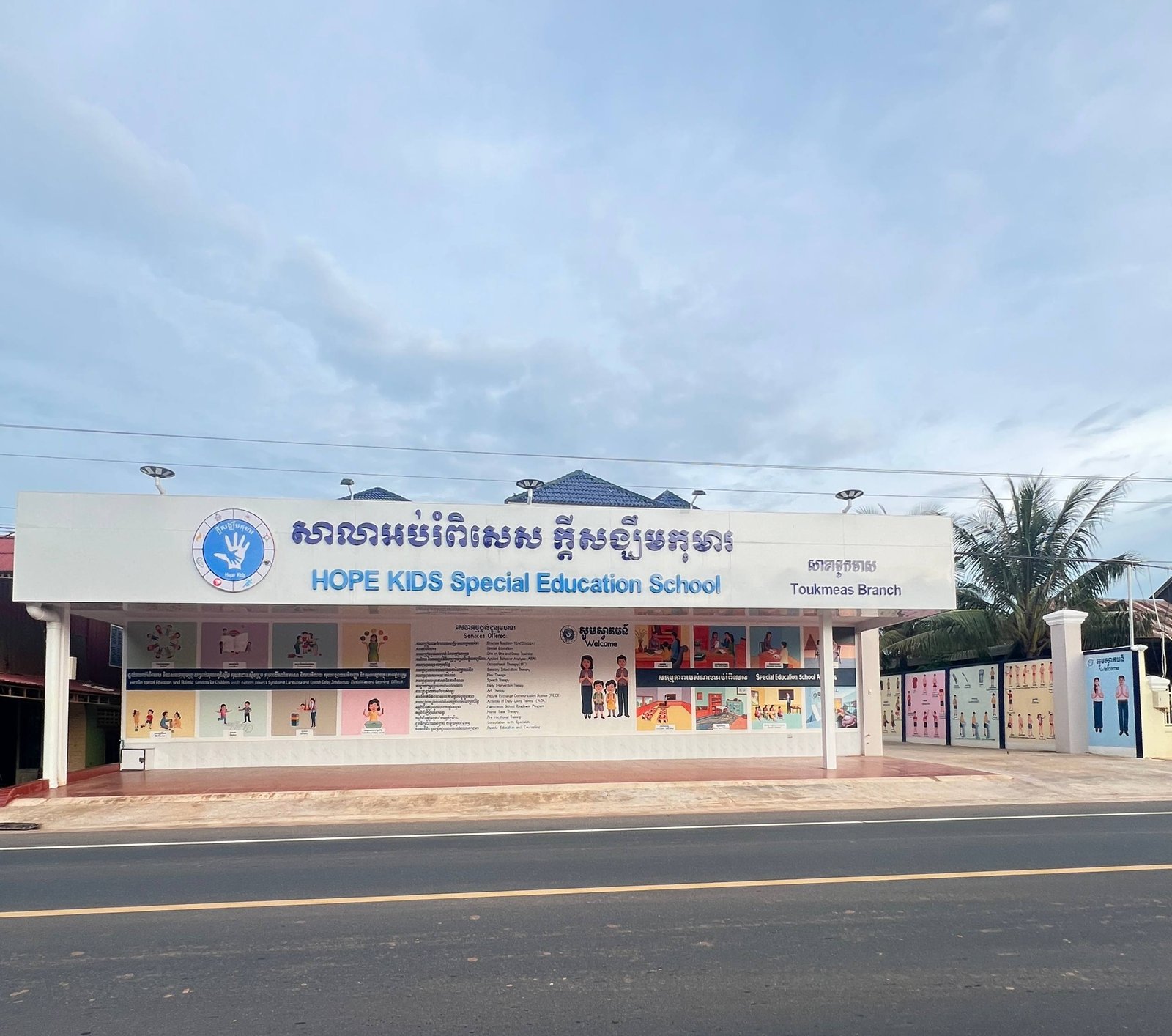
National Road No. 31, Tropang Montrey Village, Samraong Kraom Commune, Banteay Meas (Toukmeas) District, Kampot Province

090 333 185 / 085 333 815

Email: hopekids.info@gmail.com

Operating Hours: Monday – Sunday | 8:00 AM – 5:00 PM

 Hope Kids Kampot

Battambang

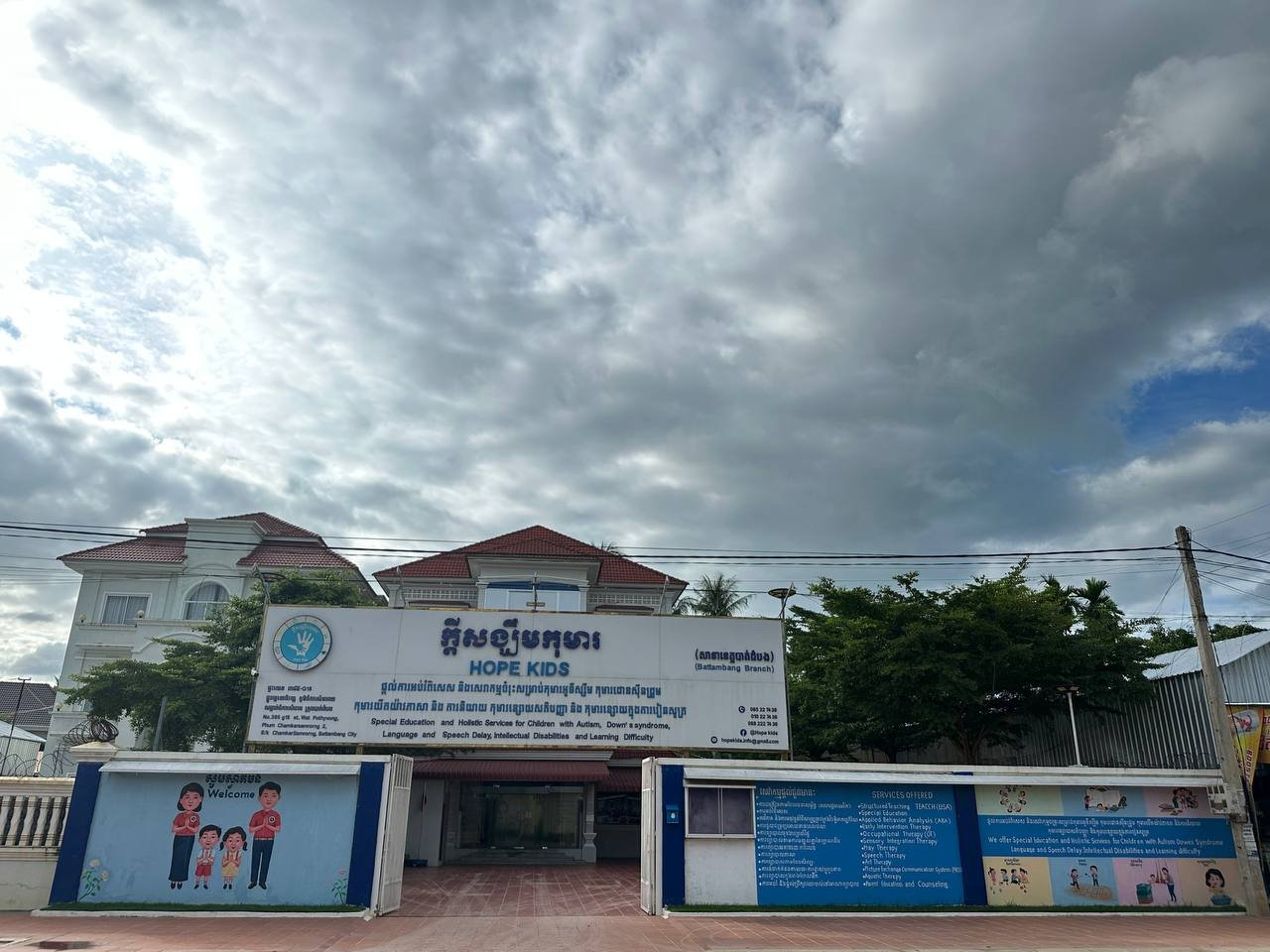
#385-G18, Wat Pothivong Street, Chamkar Samraong 2 Village, Chamkar Samraong Commune, Battambang City

085 227 436 / 010 227 436

Email: hopekids.info@gmail.com

Operating Hours: Monday – Sunday | 8:00 AM – 5:00 PM

 Hope Kids Battambang

Banteay Mean Chey

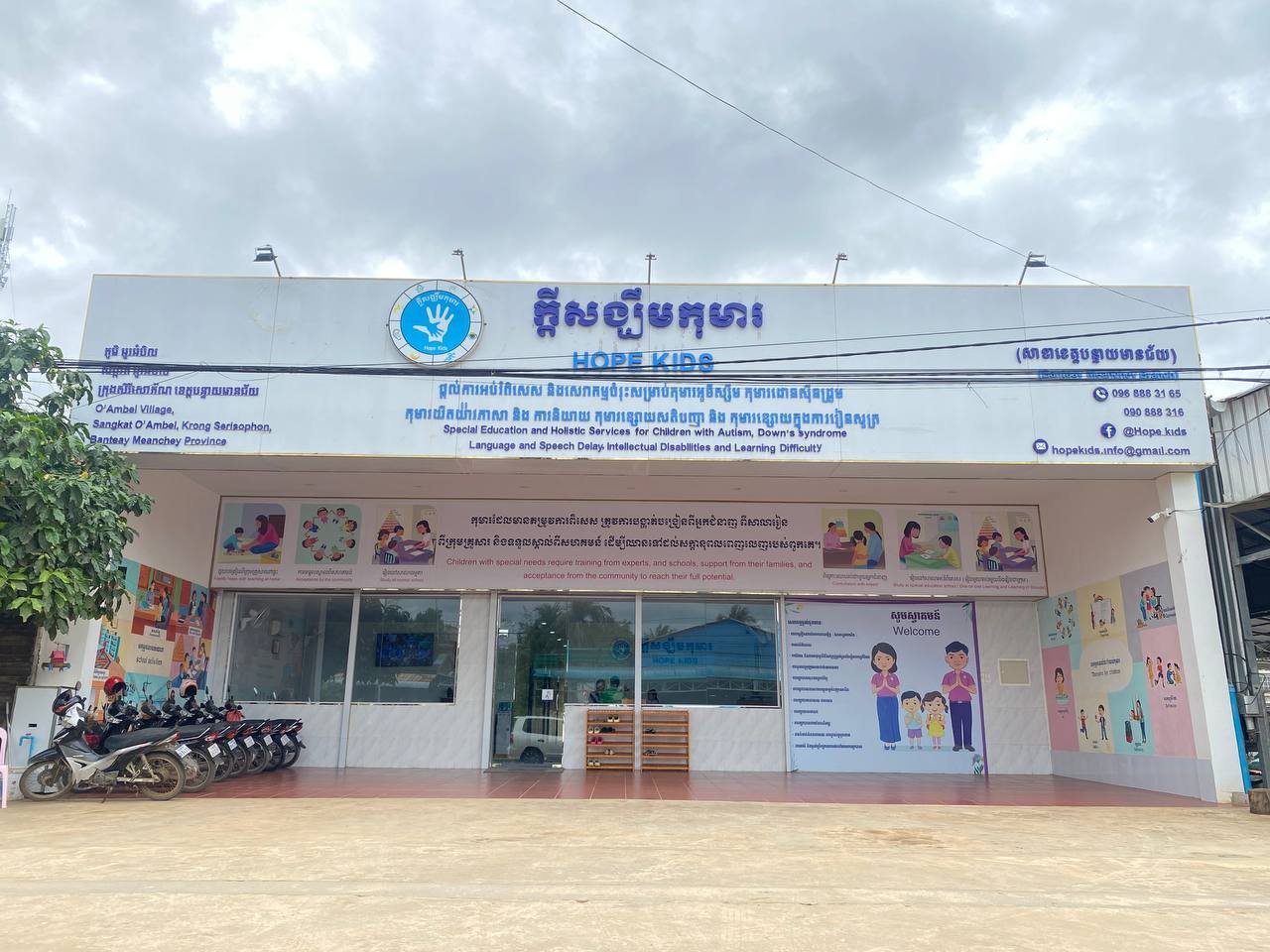
Ou Ambel Village, Ou Ambel Commune, Serei Saophoan City, Banteay Meanchey Province

096 888 3165 / 090 888 316

Email: hopekids.info@gmail.com

Operating Hours: Monday – Sunday | 8:00 AM – 5:00 PM

 Hope Kids Banteay Mean Chey

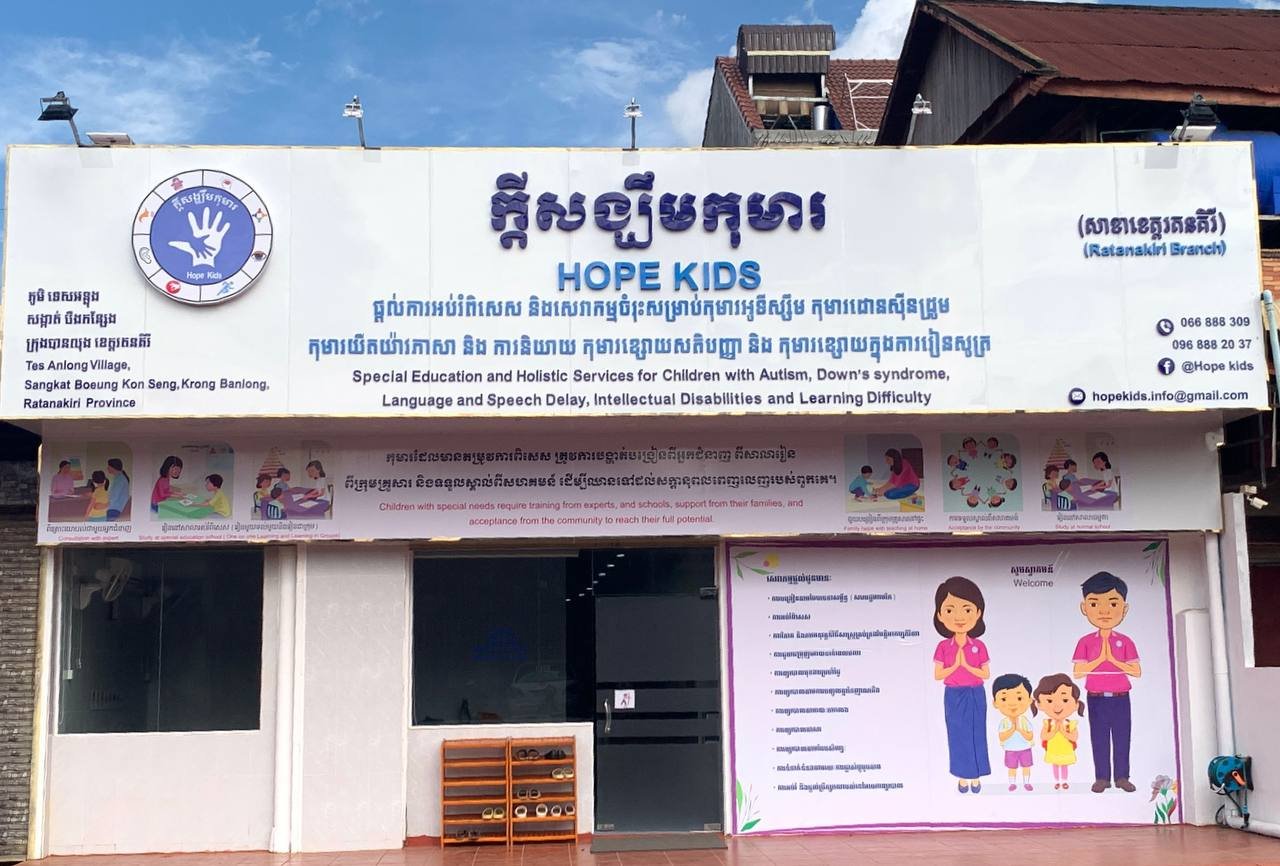
Ratanakiri

Tes Anlong Village, Boeung Kanseng Commune, Banlung City, Ratanakiri Province

066 888 309 / 096 888 2037

Email: hopekids.info@gmail.com

Operating Hours: Monday – Sunday | 8:00 AM – 5:00 PM

 Hope Kids Ratanakiri

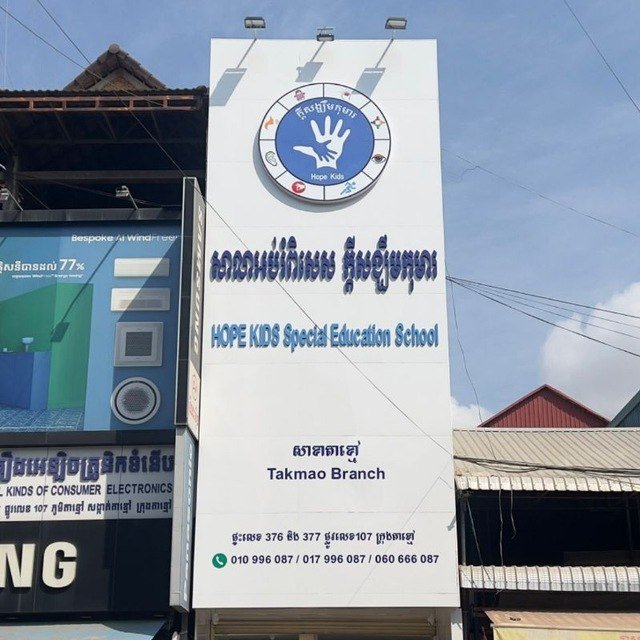
Hope Kids Special Education School Takhmau

House number 376 and 377 Road No.107, Ta Khmau, Kandal
010 996 087 / 017 996 087 / 060 666 087
Email: hopekids.info@gmail.com

Operating Hours: Monday – Sunday | 8:00 AM – 5:00 PM

 Hope Kids Hope Kids Special Education School Takhmau
Logo

Hope Kids

Special Education School

Hope Kids Special Education School is a leading autism and special needs education center in Phnom Penh and across Cambodia. We provide affordable programs for children with autism, ADHD, cerebral palsy, and other developmental challenges through compassionate teaching and therapy.

Contact Us

#579, Street 35C, Phum Meanchey, Sangkat Steung Meanchey, Khan Meanchey, Phnom Penh, Cambodia

+855 86 253 388

+855 85 253 388

Email: hopekids.info@gmail.com

Operating Hours:

Monday – Friday | 8:00 AM – 5:00 PM

Saturday | 8:00 AM – 5:00 PM

Sunday | 8:00 AM – 5:00 PM

HOPE KIDS Special Education School