Picture Exchange Communication System (PECS)
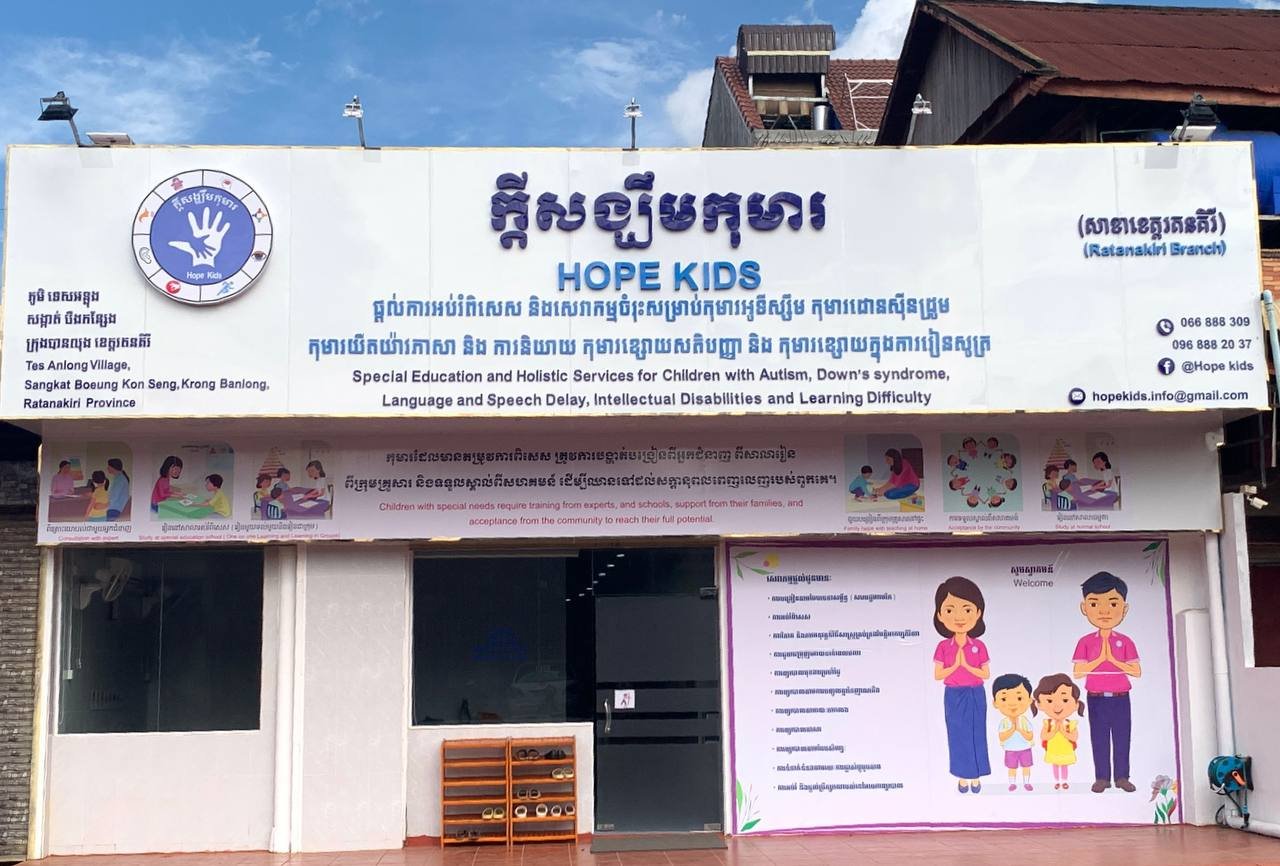
Hope Kids provides affordable, inclusive, and professional education for children with autism and special needs in Phnom Penh and across Cambodia.
Picture Exchange Communication System (PECS)

Building Functional Communication Through Pictures and Visual Supports
What Is PECS?
Who Can Benefit From PECS?
PECS may be considered for children who have limited or emerging spoken language, are minimally speaking or nonspeaking, have difficulty communicating wants and needs, have Autism Spectrum Condition (ASC), have developmental delays, have intellectual or developmental disabilities, have significant expressive communication difficulties, or need additional support to communicate independently. PECS is not only for children with autism. The most appropriate communication system depends on the individual child's abilities, communication needs, preferences, environment, and goals. An assessment can help determine whether PECS or another AAC approach is appropriate.

Limited Spoken Language
Children with limited or emerging spoken language who need an alternative way to communicate.

Minimally Speaking
Children who are minimally speaking or nonspeaking and need a reliable communication method.

Autism Spectrum Condition
Children with ASC who may benefit from a structured visual communication system.

Developmental Delays
Children with developmental delays or intellectual and developmental disabilities.

Communication Difficulties
Children with significant expressive communication difficulties who need additional support.

Individual Assessment
Each child's needs are unique. An assessment helps determine whether PECS or another AAC approach is appropriate.
PECS and Augmentative and Alternative Communication (AAC)
Why Is Functional Communication Important?
- A child may need to communicate:
- • "I want juice."
- • "Help me."
- • "More."
- • "Finished."
- • "I don't like that."
- • "I want to play."
- • "Look!"
- • "Where is Mum?"
- • "I need a break."
- When a child does not yet have a reliable way to communicate these messages, they may have difficulty participating in learning, play, routines, and relationships. For some children, communication difficulties may also contribute to frustration when others do not understand what they are trying to communicate. Providing a functional communication system gives the child another way to make their message understood.
The Six Phases of PECS
PECS follows a structured six-phase protocol. Each phase builds specific communication skills.
Phase 1: How to Communicate
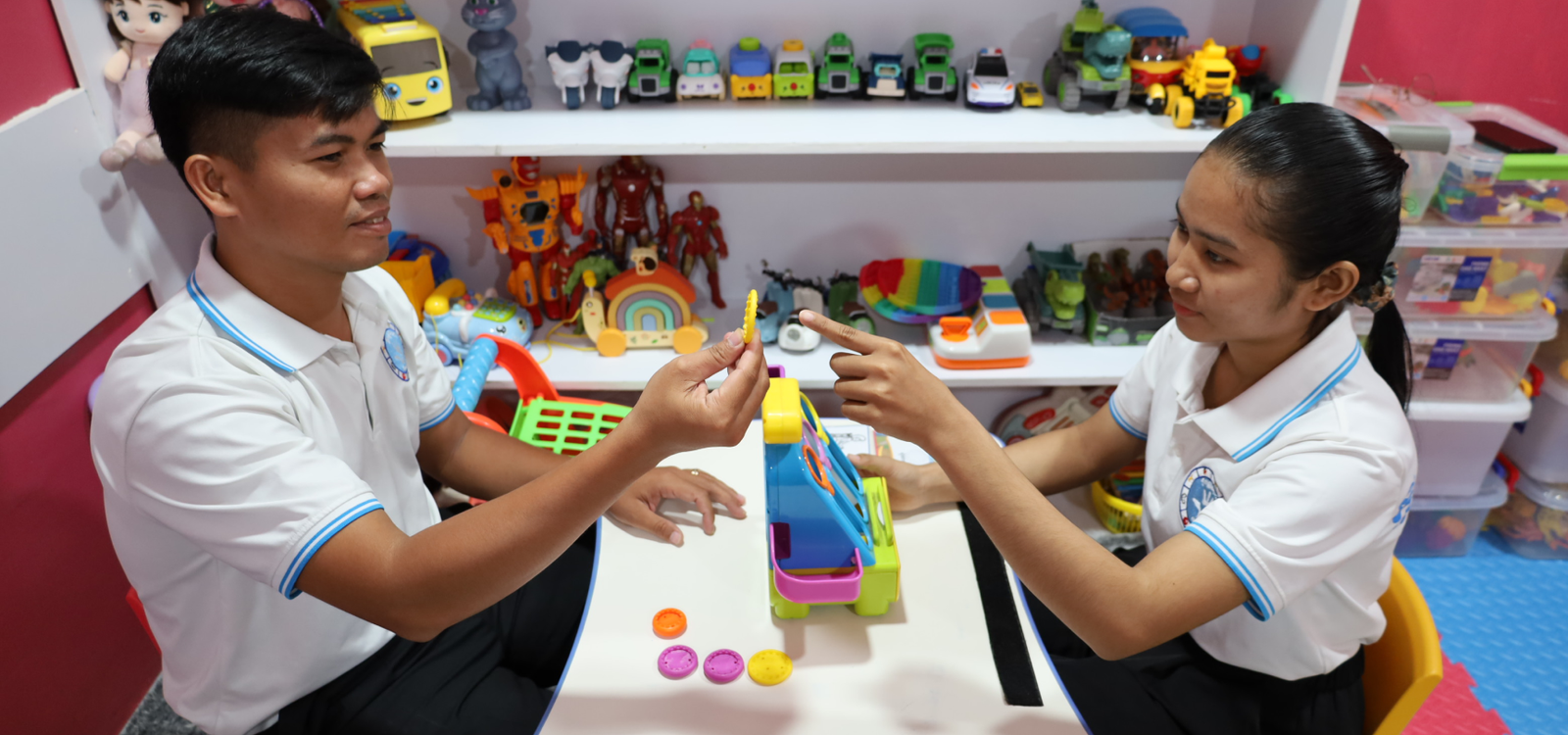
The child learns the basic exchange: Picture → Communication Partner → Desired Item or Activity. The child learns that giving a picture to another person can be an effective way to communicate.
Phase 2: Distance and Persistence
The child learns to use PECS across different situations, including traveling to a communication partner, retrieving the communication book or picture, communicating across increasing distances, persisting when communication is not immediately successful, and using the skill with different communication partners.
Phase 3: Picture Discrimination
The child learns to select between pictures. For example, the child may choose between pictures representing juice or cracker. The child learns that different pictures represent different choices and that selecting the appropriate picture communicates a specific message.
Phase 4: Sentence Structure
The child begins constructing simple picture-based sentences. For example: I want + juice. This phase introduces a more structured way of combining symbols to communicate.
Phase 5: Answering Questions
The child learns to respond to questions such as: "What do you want?" The focus is on developing more flexible communication rather than relying only on spontaneous requests.
Phase 6: Commenting
The child learns to communicate about things beyond requesting. This may include commenting on what they see, what they hear, what they are doing, what they like, and what is happening around them. This helps expand communication toward broader social interaction and language use.
Can PECS Support Speech Development?
What Skills Can PECS Support?
PECS can support a wide range of communication and developmental skills across everyday environments.
Functional Communication
• Requesting
• Making choices
• Communicating wants and needs
• Asking for help
• Communicating "finished"
• Initiating communication
Language Development
• Building vocabulary
• Combining symbols
• Developing sentence structures
• Understanding relationships between words and concepts
• Expanding communication beyond basic requests
Social Communication
• Initiating interactions
• Communicating with different people
• Commenting
• Sharing interests
• Participating in social routines
Independence
• Communicating preferences
• Making choices
• Advocating for needs
• Participating in daily routines
• Communicating across different environments
Functional Communication
• Requesting
• Making choices
• Communicating wants and needs
• Asking for help
• Communicating "finished"
• Initiating communication
Language Development
• Building vocabulary
• Combining symbols
• Developing sentence structures
• Understanding relationships between words and concepts
• Expanding communication beyond basic requests
Independence
• Communicating preferences
• Making choices
• Advocating for needs
• Participating in daily routines
• Communicating across different environments
Social Communication
• Initiating interactions
• Communicating with different people
• Commenting
• Sharing interests
• Participating in social routines
How Hope Kids Delivers PECS Support
At Hope Kids, PECS instruction is adapted to the child's current abilities and communication goals. The focus may include requesting, choice-making, sentence development, commenting, or generalizing communication across environments.
Communication Assessment
We consider the child's current communication abilities, including how they currently communicate, whether they use spoken words, gestures or signs, existing pictures or symbols, communication with familiar and unfamiliar people, ability to initiate communication, ability to make choices, and current communication challenges. This helps determine whether PECS is appropriate and what communication goals should be prioritized.
Individualized PECS Program
PECS instruction is adapted to the child's current abilities and communication goals. The focus may include requesting, choice-making, sentence development, commenting, or generalizing communication across environments.
Structured Teaching
PECS uses a systematic teaching sequence rather than simply giving a child a set of picture cards. Children are taught specific communication behaviors progressively, with opportunities to practice and generalize skills.
Communication Across Environments
Where appropriate, PECS skills are practiced across therapy sessions, classroom activities, mealtimes, play, daily routines, home, and community environments. The aim is meaningful, functional communication.
Family Involvement
Parents and caregivers play an important role in helping children use communication skills throughout the day. Families can be supported to recognize communication attempts, provide meaningful communication opportunities, use pictures consistently, respond to communication attempts, encourage independent communication, and practice communication during everyday routines.
Ongoing Progress Monitoring
Communication goals are reviewed as the child develops. Progress may include looking at frequency of spontaneous communication, types of messages communicated, independence, ability to communicate with different people, generalization across environments, progress through PECS phases, and development of other communication modalities. The communication system can also be adjusted as the child's needs change.
PECS at Hope Kids: Professional Training
What Does the Research Say About PECS?
Why Choose Hope Kids for PECS?
Hope Kids offers structured PECS support tailored to each child's communication abilities, goals, and everyday environments. Our approach emphasizes functional communication, family-centered support, and multidisciplinary collaboration.
Trained PECS Team
Our team includes professionals with formal PECS training through Pyramid Educational Consultants Australia.
Individualized Communication Support
PECS is introduced and taught according to each child's communication abilities and goals.
Functional Communication Focus
We focus on communication that the child can use meaningfully in everyday life, rather than simply teaching picture identification.
Multimodal Communication
PECS can be used alongside speech, gestures, signs, and other AAC systems when appropriate.
Family-Centered Support
Parents and caregivers are supported to help the child use communication skills across everyday routines and environments.
Multidisciplinary Collaboration
PECS can complement Speech & Language Therapy, Special Education, ABA, Structured Teaching, and Early Intervention when these services are appropriate for the child.
Frequently Asked Questions
Contact Hope Kids
If your child has difficulty communicating, Hope Kids can help you explore whether PECS or another AAC approach may be appropriate. Our goal is to give every child meaningful opportunities to communicate, make choices, express their needs, participate in learning, and connect with the people around them. Communication should not have to wait for speech.
Contact UsContact Hope Kids
If your child has difficulty communicating, Hope Kids can help you explore whether PECS or another AAC approach may be appropriate. Our goal is to give every child meaningful opportunities to communicate, make choices, express their needs, participate in learning, and connect with the people around them.