



Parents sometimes hear the phrase “early intervention” and assume it applies only to babies or children with a confirmed diagnosis.
It is broader than that.
Early intervention refers to services and support for young children who have developmental delays, disabilities, or emerging developmental concerns. Services may include speech and language therapy, occupational therapy, physiotherapy, developmental education, behavioral support and caregiver coaching.
The purpose is to help children develop useful skills and participate more successfully in everyday life.
What Does Early Intervention Actually Mean?
Early intervention is not one specific therapy.
It is an approach to identifying a child's developmental needs and providing appropriate support.
A child may receive help with:
- Communication
- Language
- Social interaction
- Play
- Movement
- Fine motor skills
- Daily living skills
- Emotional regulation
- Learning
- Attention
- Independence
- School readiness
The specific combination should depend on the child's needs.
The CDC describes early intervention as services and supports for babies and young children with developmental delays or disabilities and their families. These services may include speech and physical therapy, among others.
Who Can Benefit From Early Intervention?
Early intervention may be appropriate for a child who:
- Is not meeting expected developmental milestones
- Has a diagnosed developmental disability
- Has a suspected developmental delay
- Has communication difficulties
- Has motor delays
- Has difficulty with daily living skills
- Has social communication differences
- Has difficulty participating in age-appropriate activities
- Has autism or another neurodevelopmental condition
- Has cerebral palsy or another physical or neurological condition
- Has multiple areas of developmental concern
A child does not necessarily need to have a diagnosis before developmental support can begin.
Does My Child Need a Diagnosis First?
Not always.
This is one of the most important things for parents to understand.
A diagnosis can provide useful information, but children should also be supported according to the difficulties they are experiencing.
The American Academy of Pediatrics recommends intervention for identified developmental delays and does not recommend waiting for an autism diagnostic evaluation before addressing developmental needs.
For example, if a child is having significant difficulty communicating, speech and language support may be appropriate even while the family is still completing a broader developmental assessment.
Why Is Early Identification Important?
Developmental monitoring helps families notice how a child is developing over time.
Screening can identify children who may need further evaluation.
Assessment can provide a more detailed understanding of the child's strengths and difficulties.
These are related, but they are not the same thing.
The CDC explains that developmental monitoring and screening can help identify potential delays and connect children and families with needed services.
Early Intervention Does Not Mean “The Earlier, the Better” for Every Situation
It is important to be precise here.
Early support can be valuable, but there is no single deadline after which intervention becomes pointless.
Children can benefit from appropriate support at different ages.
The goal is not to rush a child through therapy.
The goal is to understand their needs and provide useful support when it is needed.
What Happens in an Early Intervention Program?
A good early intervention program should begin by understanding the child.
Questions may include:
What can the child currently do?
What skills are emerging?
Where are the difficulties?
How do these difficulties affect everyday participation?
What skills would make the biggest difference to the child's life right now?
How will progress be measured?
This helps prevent therapy from becoming a collection of disconnected exercises.
What Services Might Be Included?
Depending on the child's needs, early intervention may include:
Speech and Language Therapy
For communication, language, speech and social communication.
Occupational Therapy
For participation in everyday activities, self-care, fine motor development, play, school-related skills and sensory processing needs.
Physiotherapy
For movement, strength, mobility, balance, posture and physical participation.
Developmental Education
For learning, play, communication, social participation and school readiness.
Behavioral Support
When children need structured support to develop skills, increase functional communication or address behaviors that interfere with participation.
Parent Coaching
Parents can learn practical ways to support communication, learning, independence and positive interaction during everyday routines.
WHO emphasizes nurturing care and coordinated, family-centred support for children with developmental delays and disabilities.
What Role Do Parents Play?
Parents are not expected to become therapists.
However, parents are an important part of a child's developmental environment.
The most useful strategies are often those that can fit naturally into:
- Mealtimes
- Bathing
- Dressing
- Shopping
- Play
- Reading
- Bedtime
- Family routines
This allows children to practise skills across different settings instead of only during therapy sessions.
How Do We Know Whether Early Intervention Is Working?
Progress should be measured against meaningful goals.
For one child, progress might mean:
“Uses a picture or word to request help.”
For another:
“Puts on shoes with fewer prompts.”
For another:
“Walks independently across the classroom.”
For another:
“Participates in a five-minute shared play activity.”
The American Academy of Pediatrics recommends individualized, measurable goals and systematic measurement of progress when supporting children with autism.
This principle is useful more broadly across developmental services too.
How Hope Kids Can Help
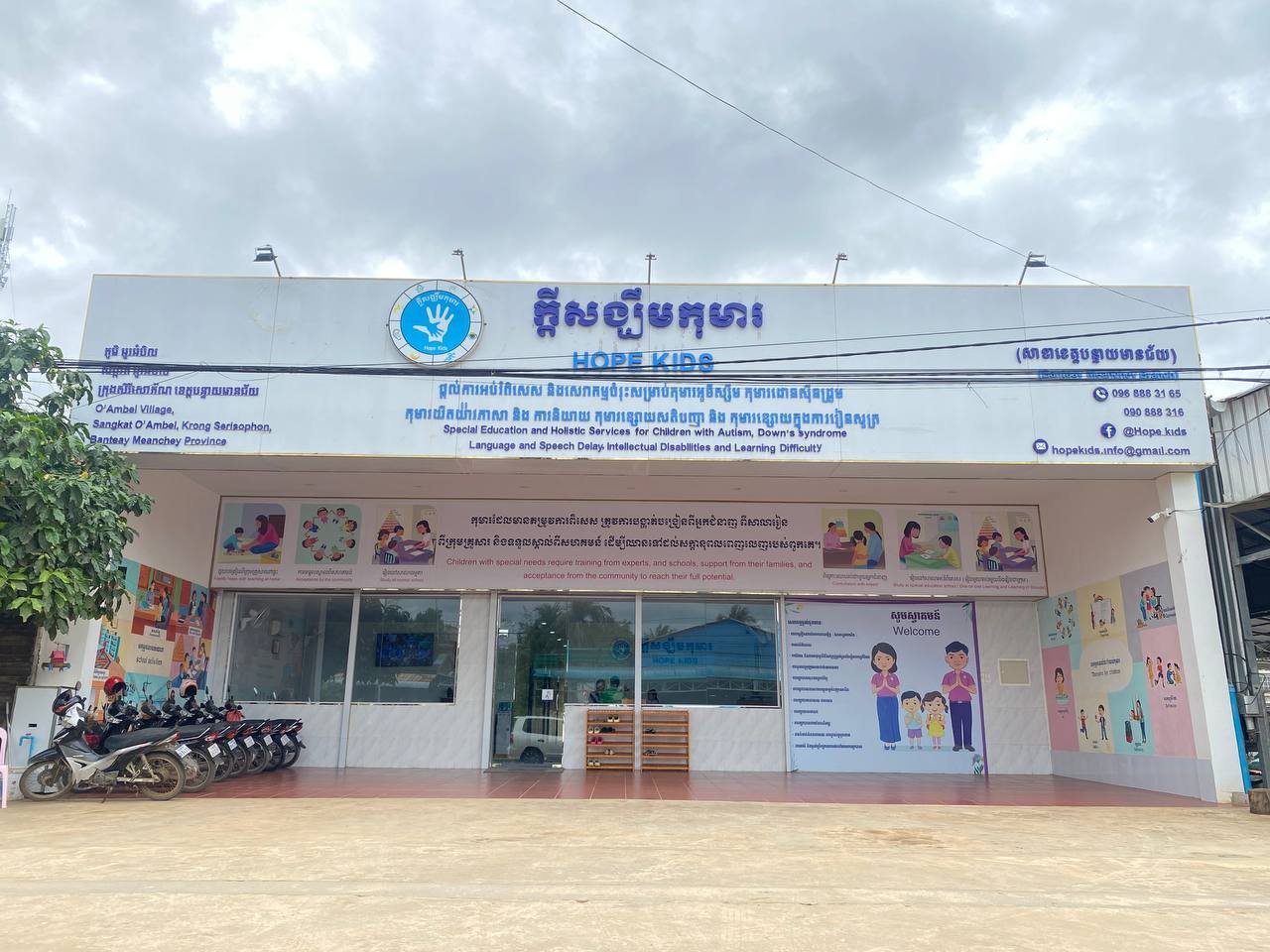
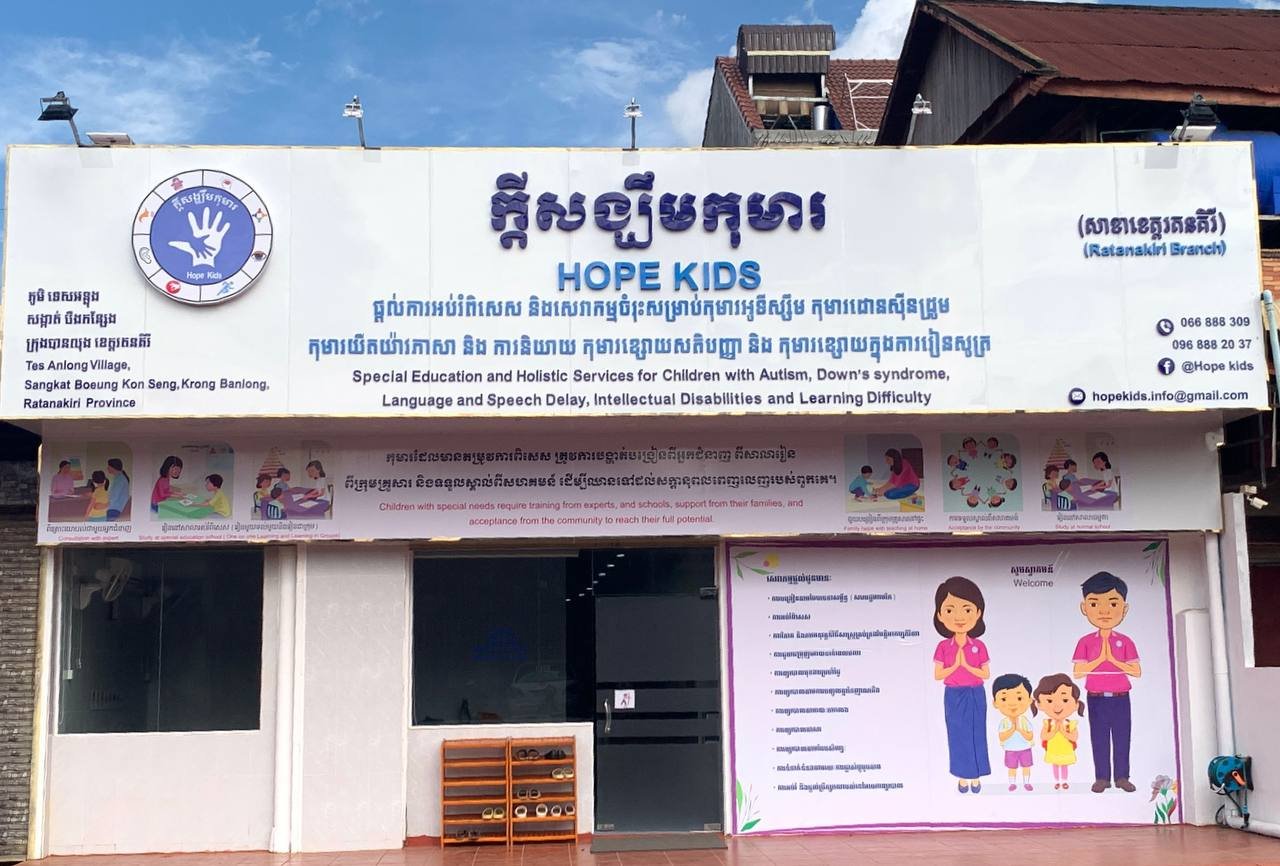
Hope Kids provides early intervention and developmental support for children in Phnom Penh and other locations in Cambodia.
Services are individualized according to the child's developmental profile and may involve special education, speech and language therapy, occupational therapy, physiotherapy, behavioral support, structured teaching and parent education.
The aim is to build skills that matter in the child's real life, not simply to complete therapy activities.
Frequently Asked Questions
What age does early intervention start?
Early intervention generally refers to support during the early childhood years, but developmental support can be useful beyond early childhood as well.
Does my child need an autism diagnosis?
No. A child can have developmental needs that deserve support without having an autism diagnosis.
Is early intervention only for children with disabilities?
No. It can also support children with developmental delays or emerging concerns.
How many therapies does my child need?
There is no universal number. The appropriate services depend on the child's strengths, needs, goals and participation difficulties.
Can parents do early intervention at home?
Parents can support many developmental goals through everyday routines. Professional guidance can help families choose strategies that are appropriate for their child.
Can older children still benefit from therapy?
Yes. Development and learning continue throughout childhood, and intervention can be useful at different ages.